
10 Must-Do Hikes & Trails Hiking in Crete + Map
Crete, the largest and most populous island in Greece, is a rugged isle with limestone mountains rising up to 2,456 meters.
By Dirk Pohlers, Greece traveller from Germany. I visit every place I write about & share real tips, photos, & advice from my trips in this Cretee travel blog.
This Mediterranean island of Crete is the largest and most populous island in Greece is and home to over 400 gorges, many of which offer thrilling hikes along their rugged stony beds. The rugged island features limestone mountains rising up to 2,450 meters. Samaria is the most famous of these gorge hikes, but it’s only open between May and October. I particularly loved the Aradena gorge hike near Chora Sfakion, and the Katholiko gorge hike, located near Chania.
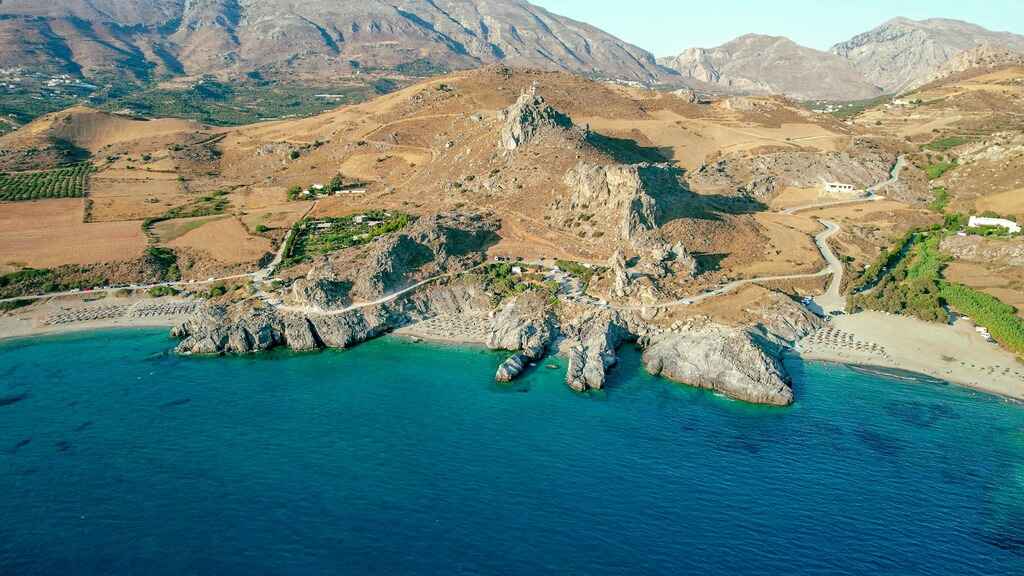
In addition to spectacular gorge trails, Crete boasts adventurous coastal hikes, hidden beach hikes, and summit hikes.
Table of Contents
Crete – a holiday and hiking paradise in Greece
The best time to hike in Crete is spring and autumn, when temperatures are mild. I visited Crete in November, at the very end of season. The weather was perfect for hiking ,and I highly recommend hiking in Crete, when you crave rugged scenery.
Like hardly any other Greek island, Crete is a paradise for hiking, and stay in Crete would not be complete without hiking in Crete.
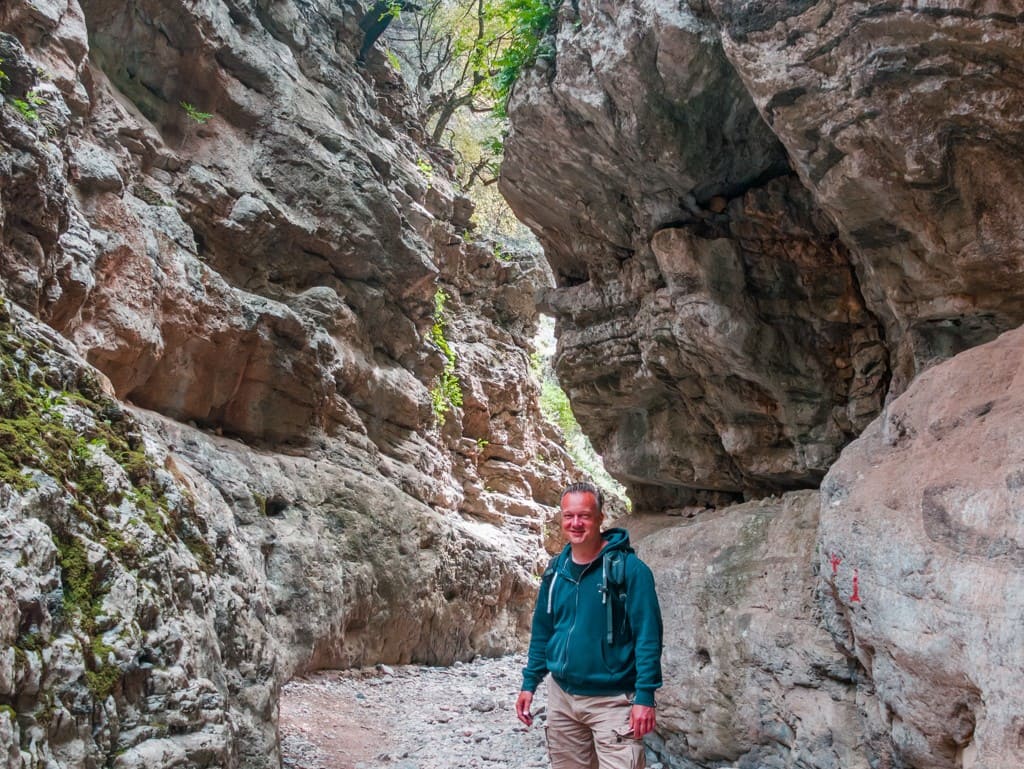
Countless gorges, mountain passes and hiking trails through the wild, romantic and barren landscape of the interior, as well as hikes along the beach and coastline, characterise hiking in Crete. Gorge hiking is the most popular type of hiking in Crete, and many people come to the island specifically for this.
Imbros Gorge
If you want to go hiking in Crete, do not miss the Imbros Gorge. The rather small gorge is not only perfect for hiking in Crete away from the mass tourism that prevails in the neighbouring Samaria Gorge, but the Imbros Gorge is also easy enough for children and beginners to master.
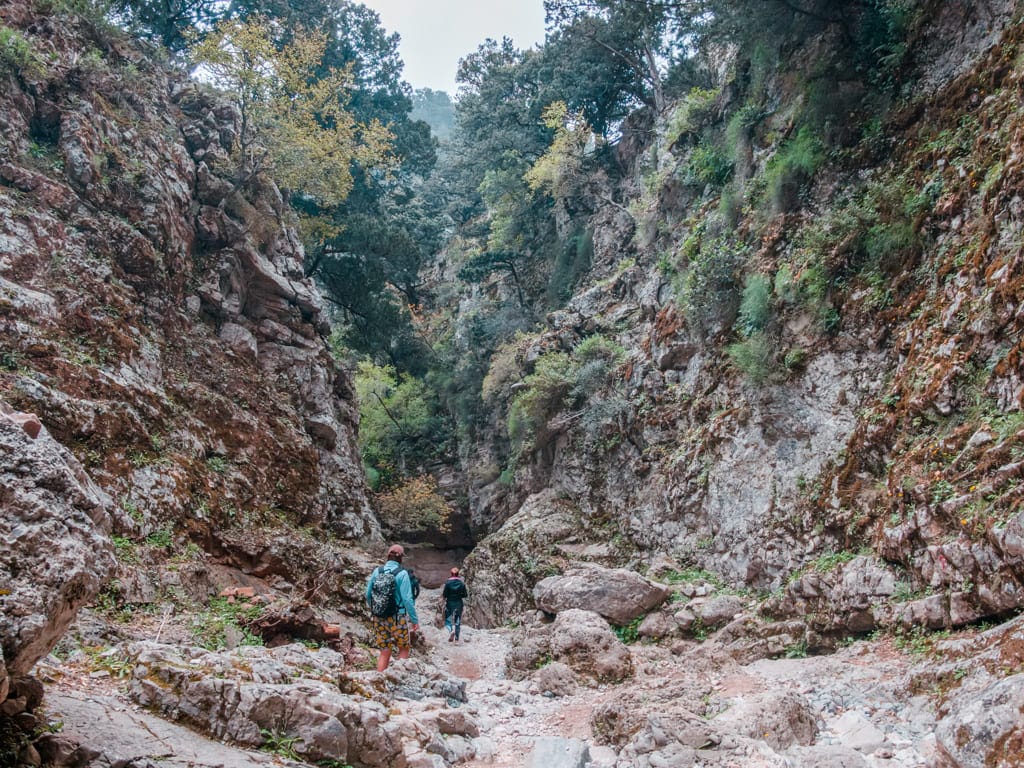
Neither steep and narrow paths nor climbing passages stand in the way of small or inexperienced feet when hiking in Crete in the Imbros Gorge.
- Difficulty: easy
- Length: appr. 6 km
- Duration: appr. 2 hrs
- Suitable for: beginners, families
- Trailhead: Imbros Gorge (Φαράγγι της Ίμπρου)
The little sister of the world-famous Samaria Gorge boasts the same impressive high rock faces and picturesque flora, but offers much more shade in summer and thus a somewhat more relaxed hiking experience in Crete.
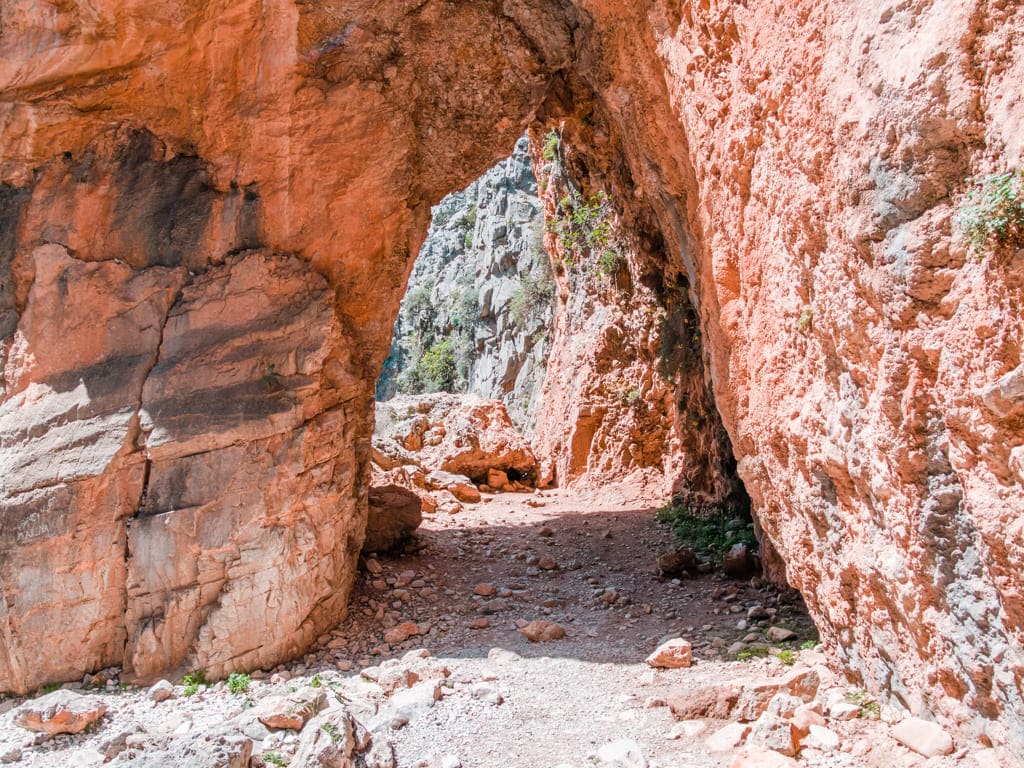
For anyone who wants to hike in Crete in spring, especially in April, the Imbros Gorge is one of the best hiking tips in Crete. The trees, plants and flowers are then lush and green. Unlike the Samaria Gorge, the Imbros Gorge is open all year round, so you can also go gorge hiking here in Crete in winter.
History: The Imbros Gorge took on special significance during the Second World War: many Allied soldiers attempted to reach the coast through it in order to be evacuated to Egypt.
Richtis Gorge
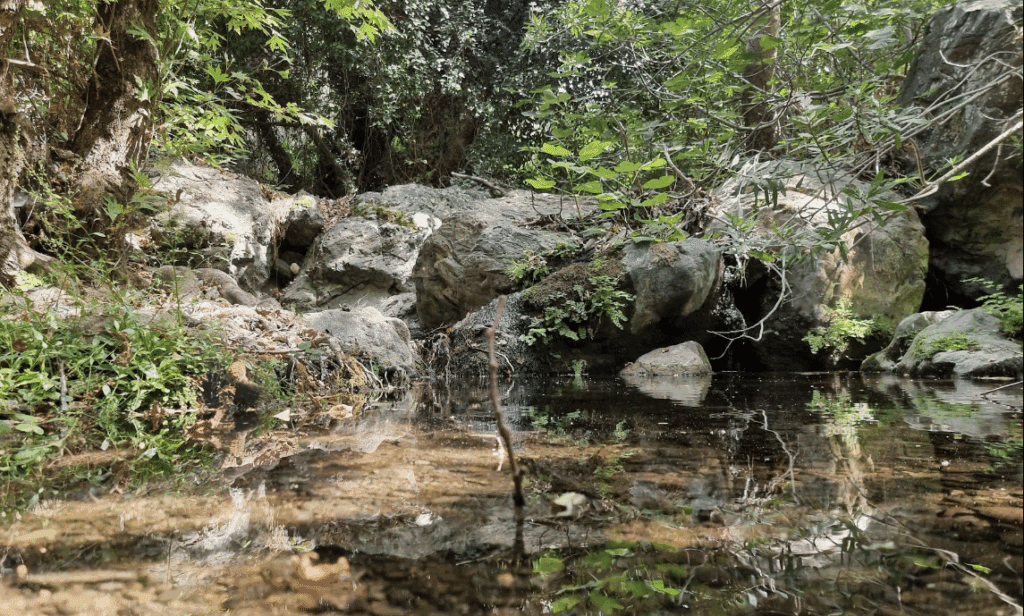
A rather moderate but beautiful green hike is the Richtis Gorge Hike in Crete. I was truly impressed how well marked this hiking trail was. Sometimes it can be a bit challenging to stay oriented on hikes in Crete, but not on this one.
- Hike length: 9 km
- Elevation gain: 380 m
- Difficulty level: Moderate
- Hiking time: 3 hours
- Parking and trailhead: Google Maps link
The hike is out and back style and is about 9 km long. You don’t have to walk all the way, many people stop at the waterfall which is located 3 km from the start, and go back.
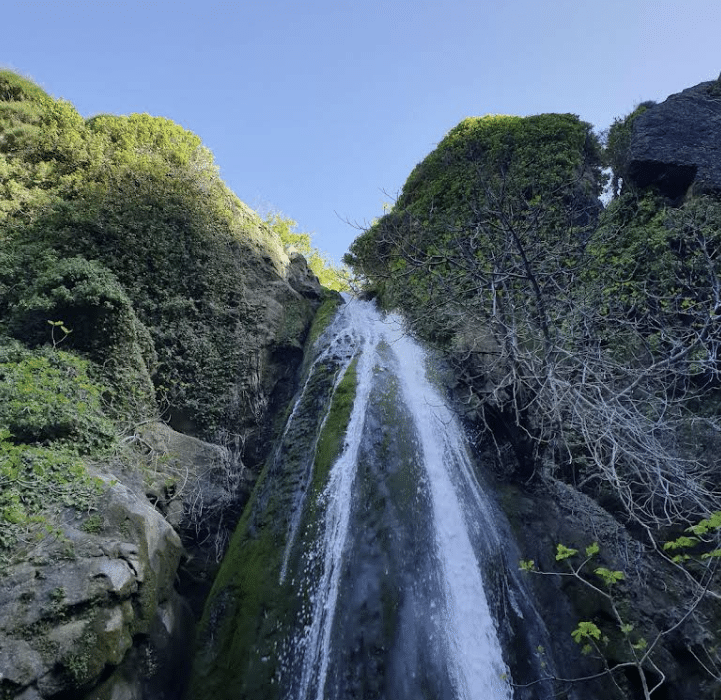
The Richtis Waterfall is picturesque and tempting to dip in during the burning hot Cretan days. I recommend stopping there for a while so don’t forget to pack your swimsuit.
The elevation gain for this huike is just is 380 meters starting with the descent one way and going up the hill on the way back. It can be a bit challenging for people who are not as fit as they should be, but as I know you my fellow readers, that won’t be a problem.
There is a small parking lot probably a mile from the beginning of the hike. You can park there for free, if you get a spot of course. If you don’t want to depend just on luck and pray to the gods you don’t even believe in, get there in the morning. The entrance fee to the park is €3 to be apid at the beginning of the hike.
Patsos Gorge Hike – Wooden bridges, ladders and a cave sanctuar
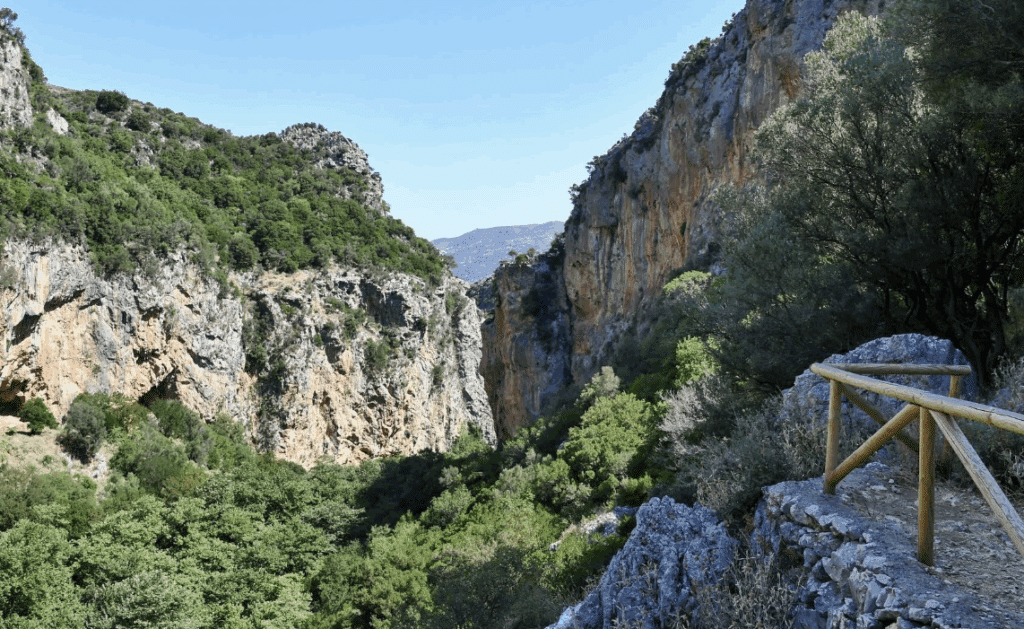
Patsos Gorge, also known as Agios Antonios Gorge, has always been one of the most popular and beautiful places to hike in Crete. The small but challenging gorge leads past lush green vegetation, along a cool stream and through impressive rock formations.
- Difficulty: moderate to difficult
- Length: appr. 5 kilometres
- Duration: appr. 2.5 hours
- Suitable for: experienced hikers, fit and sure-footed beginners
- Best hiking time: summer
There is a lot more to discover besides caves, small waterfalls and the rock church of Agios Antonios.
I recommend hiking in the Patsos Gorge in Crete in the summer. The stream provides cooling, and the water level of the river is so low that you can reach the end of the gorge with your feet reasonably dry. (Nevertheless, take a pair of spare socks with you.)
In spring and autumn, the river sometimes carries so much water that when hiking in Crete in this gorge, you will be standing knee-deep in water or the gorge may even be completely closed.
The Patsos Gorge is not suitable for individual hiking in Crete. It is recommended to take part in a guided hike. The trail leads partly over very rocky terrain with descents via ladders and steep and narrow passages alternating with scrambling over large rocks. The Patsos Gorge is a trily adventurous Crete gorge for hiking.
Tip: In Crete, guided hikes can be booked either on site with your tour operator or online in advance.
Read on: Where to stay in Crete
Samaria Gorge
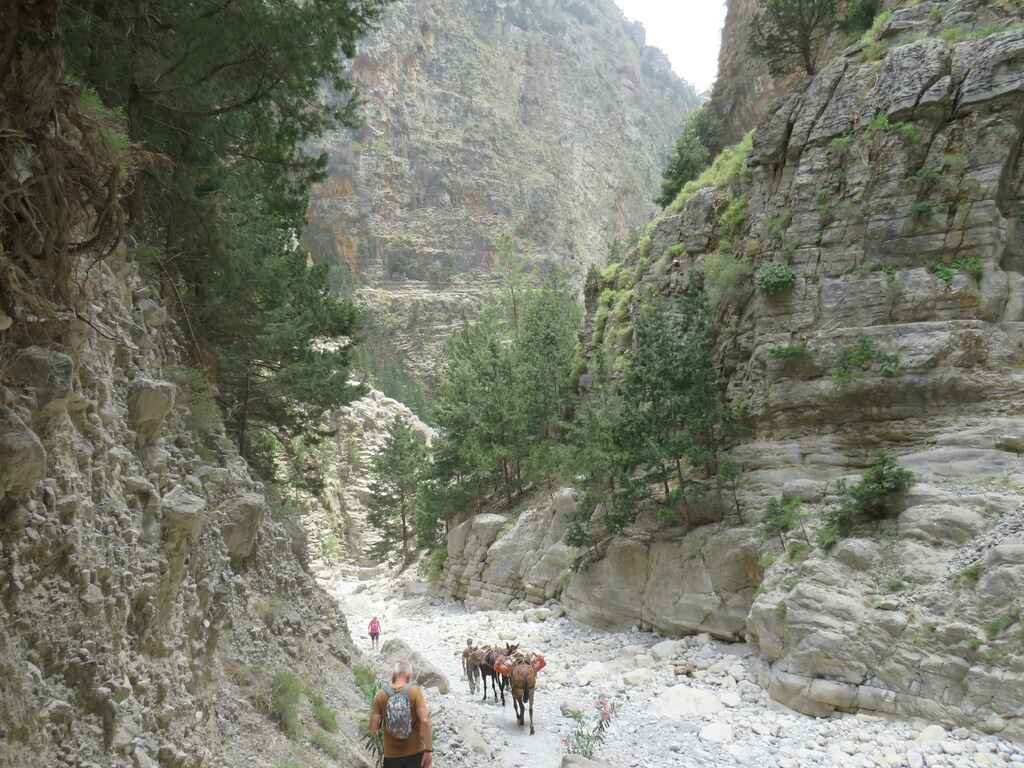
Facts about the Samaria Gorge Hike:
- Route length: 16 km
- Duration: 6–7 hours
- Elevation: 50 m uphill, 1,200 m downhill
- Difficulty: moderate to difficult
- Starting point: Xyloskalo Parking
When is Samaria gorge open? Samaria is only open from the beginning of May to mid/late October, from 7:00 a.m. to 4:00 p.m.
The Samaria Gorge is the most famous hiking destination in Crete. Every day, more than 4,000 tourists flock to the approximately 15-kilometre-long gorge in the south-west of the island. Your route takes you past small churches, the tree-lined riverbed of the Tarraios, wandering through abandoned ruined towns.
The highlight is the ‘Iron Gate’, the narrowest point of the gorge at just 4 metres. At the end of the gorge, you can also enjoy a refreshing dip in the Libyan Sea and the idyllic village of Agia Roumeli.
Tip: There is no mobile phone reception and no cafés, taverns or similar establishments in the gorge, so you should definitely take food and water with you. Drinking water, however, is available also at many springs in the Samaria Gorge. If you want to go hiking in Crete, you should definitely have the right equipment with you. Make sure to bring hiking boots, sun protection and a lightweight water bottle.
In summer, temperatures in the gorge can reach up to 40 °C, making the hike quite challenging. I therefore strongly advise against taking children on a tour of the Samaria Gorge.
Note: The return journey from the Samaria Gorge can only be made by ferry to the villages of Sougia or Chora Skafion, as there is no road leading to Agia Roumeli. Therefore, please remember to organise a ferry ticket or, better still, take part in a tour of the Samaria Gorge. Transport is included in the tour price, so you don’t have to worry about anything.
My tips for Agia Roumeli
Restaurant tip in Agia Roumeli
I can highly recommend the restaurant Calypso, which is located almost directly on the beach in Agia Roumeli. Here, you won’t find tourist gyros plates, but excellent Greek mezze such as stuffed vine leaves and courgette flowers. I also really enjoyed the moussaka!
Accommodation in Agia Roumeli
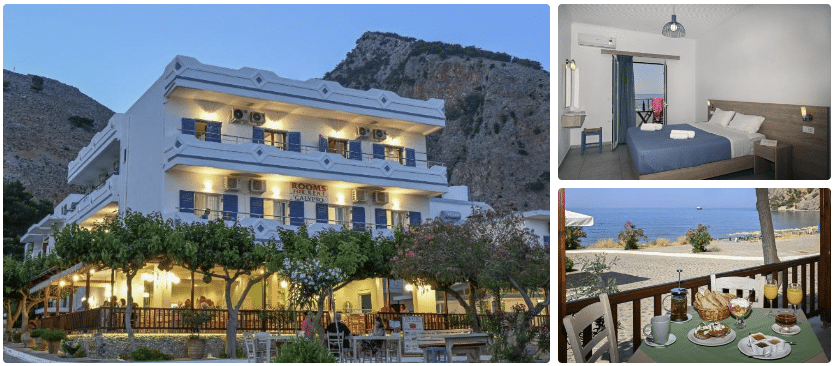
The small Calypso hotel was my favourite place to stay during this hiking trip in Crete. It is quietly located in a side street and has wonderful, helpful hosts. The rooms are totally charming and cosy with a great balcony and sea or mountain views. ☑ Check prices and availability here.
I was particularly impressed by the lovingly served breakfast, which left nothing to be desired. The tavern in the courtyard is also highly recommended for dinner.
Kourtaliotiko Gorge
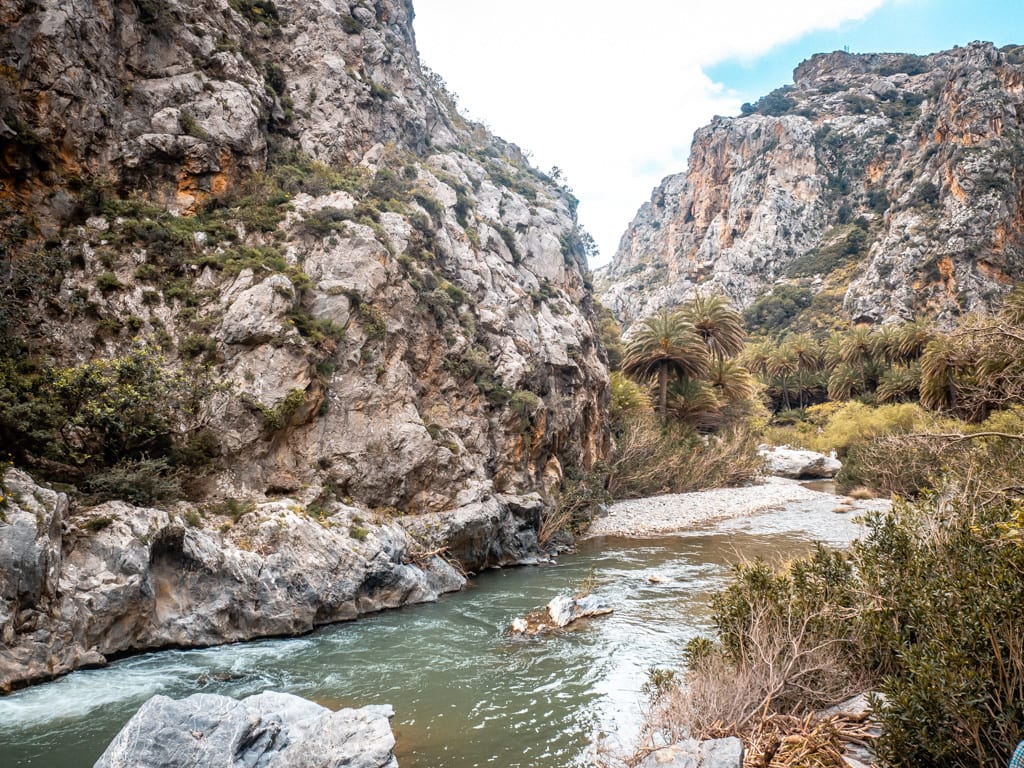
One of the top natural highlights of Crete awaits you in the Kourtaliotiko Gorge. The wild and romantic and very challenging gorge is home not only to a river with exciting caves and waterfalls, but also to rare animal species and beautiful wildflowers.
- Difficulty: difficult
- Length: approx. 10 kilometres
- Duration: approx. 4 hours
- Suitable for: experienced hikers, fit and sure-footed beginners
- Swimming skills essential
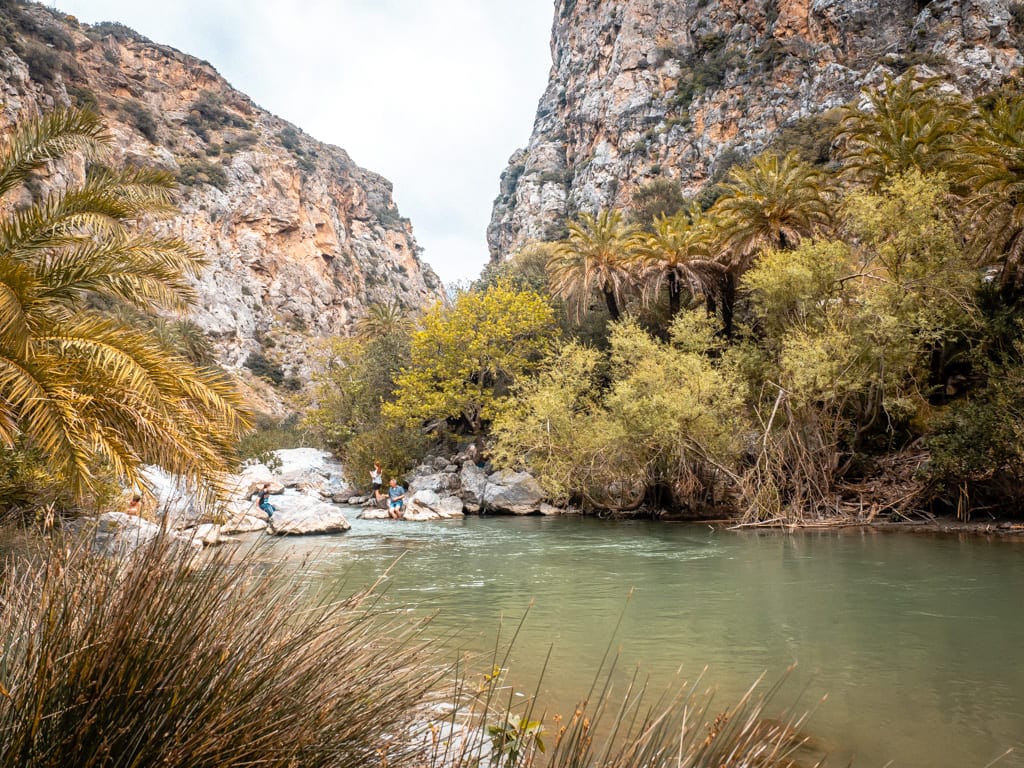
At the end of the gorge, you will be rewarded with even more nature and one of the most beautiful beaches in Crete – the palm beach of Preveli. This is why the gorge is often called Preveli Gorge, even though it is only the last and shortest part at the end of the river.
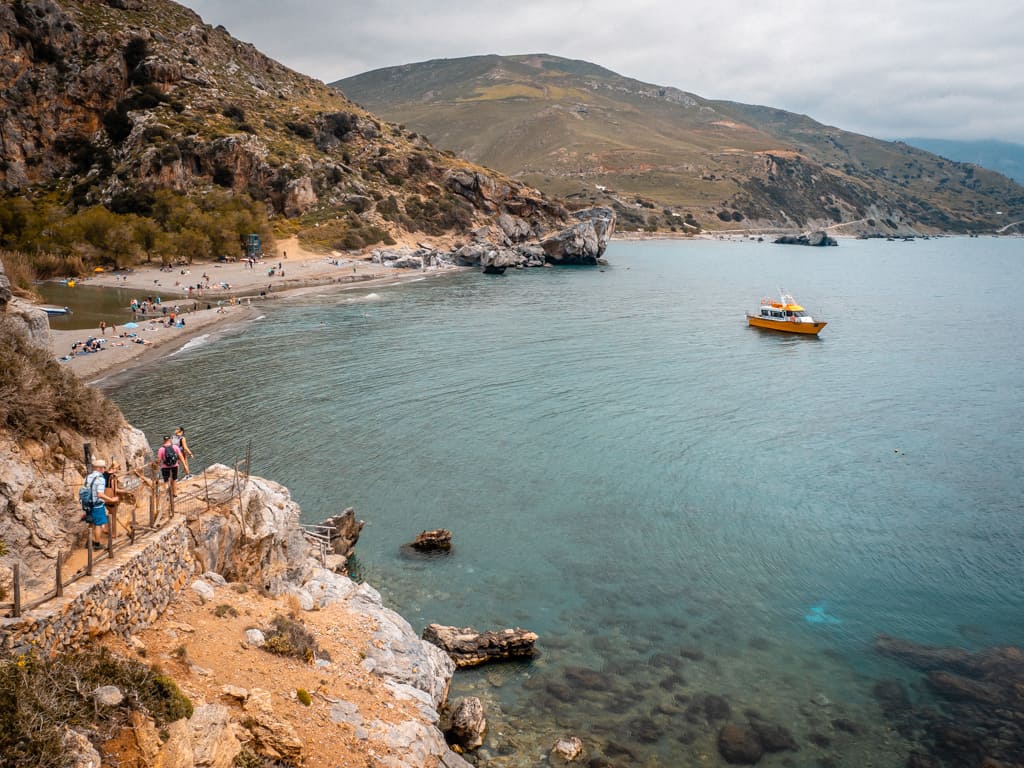
As the path leads through narrow rock formations, over large stones and deep water, and is therefore not entirely without danger, I strongly recommend that you take a guided hike if you want to hike in this gorge in Crete.
You should also be able to swim and bring sturdy shoes and sun protection. In addition, I recommend a waterproof rucksack or at least waterproof bags for your mobile phone or camera. The Kourtaliotiko Gorge should not be hiked in spring, late autumn or winter, as experience has shown that flooding can occur at these times.
Myli Gorge
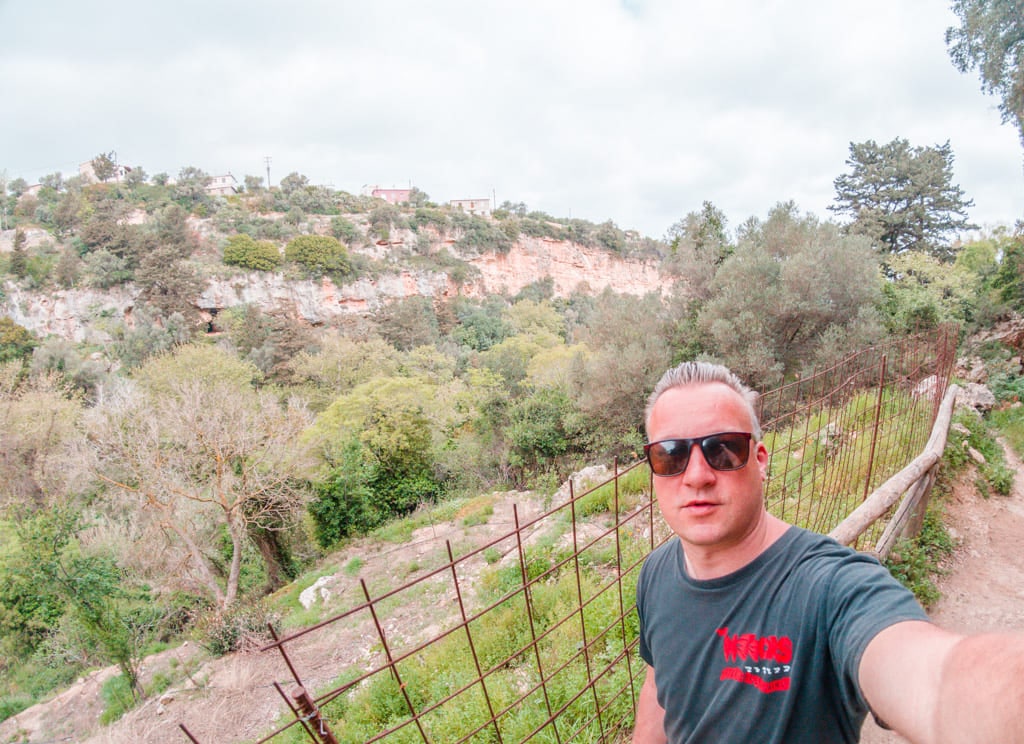
The Myli Gorge in northern Crete is also known as the Valley of the Windmills and is one of the highlights of hiking in Crete. The approximately four-kilometre-long gorge is particularly impressive due to its magnificent green vegetation, which is almost reminiscent of a jungle.
- Difficulty: easy
- Length: approx. 4 kilometres
- Duration: approx. 2 hours one way
- Suitable for: beginners, families
Trees, ferns, bushes, grasses and fragrant flowers line a small stream that accompanies you through the gorge. In some places, there are even lemon, orange and fig trees, and splashing waterfalls provide pleasant refreshment.
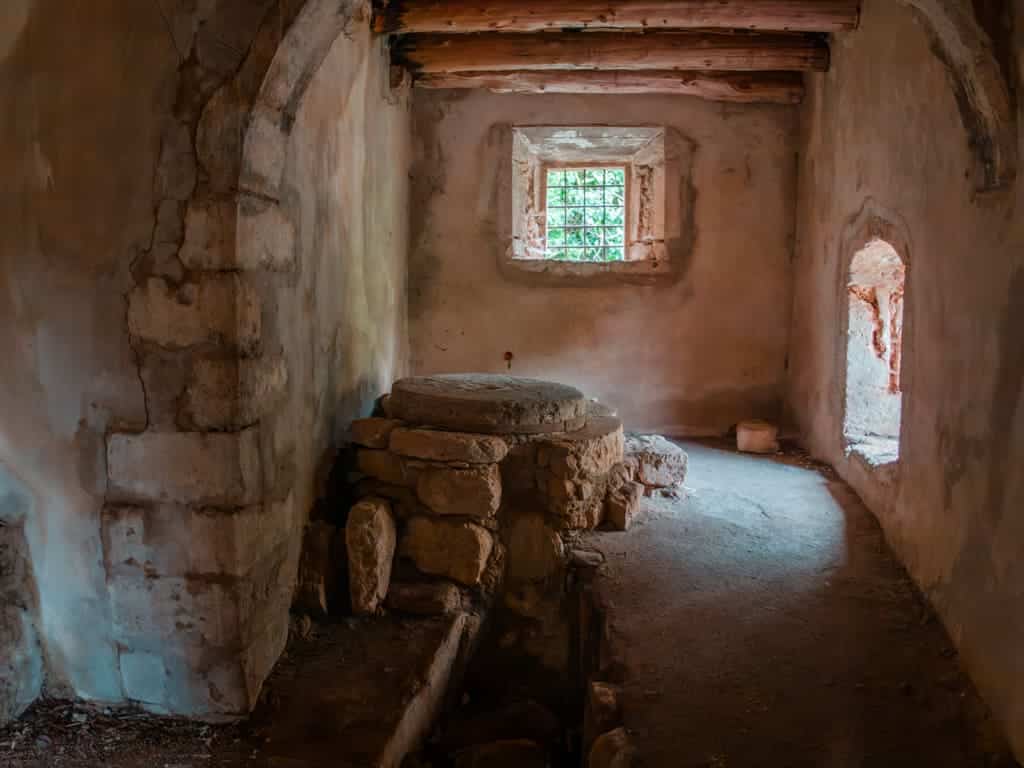
As the name suggests, you will encounter numerous old mills on your hike. Some of the former grain mills date back to the 17th century and were still in operation until the 1970s. Today, they are abandoned and nature has reclaimed its territory, giving this Cretan gorge a very special flair.
In addition to the mills, the Myli Gorge also features numerous picturesque churches, bridges and abandoned villages. The Myli Gorge in Crete is ideal for hiking, especially for beginners and families with small children. With hardly any inclines, few obstacles, many picnic and rest areas and a cute tavern, hiking in Crete here is a relaxing experience.
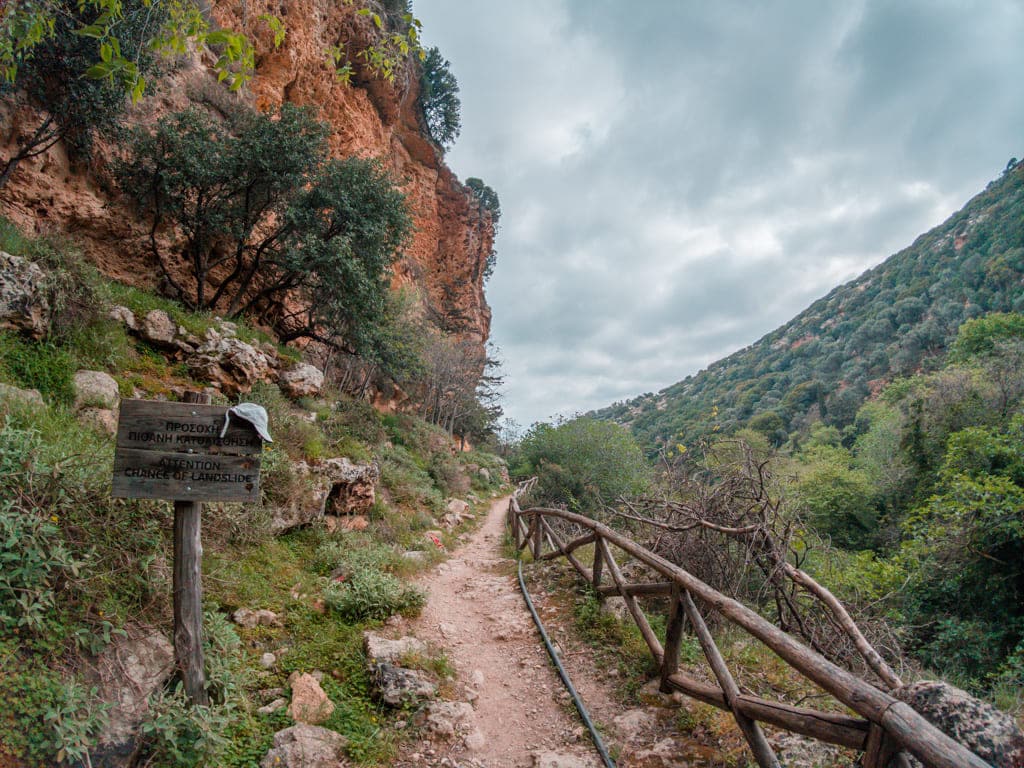
Tip: Even though hiking in Crete through the Myli Gorge is fairly easy, the path is still rocky. I recommend wearing sturdy footwear in the form of hiking boots or high-quality trainers.
Aradena Gorge
The Aradena Gorge in south-western Crete is one of the neighbouring gorges of the famous Samaria Gorge, but far less crowded because it is much more challenging and difficult to hike.
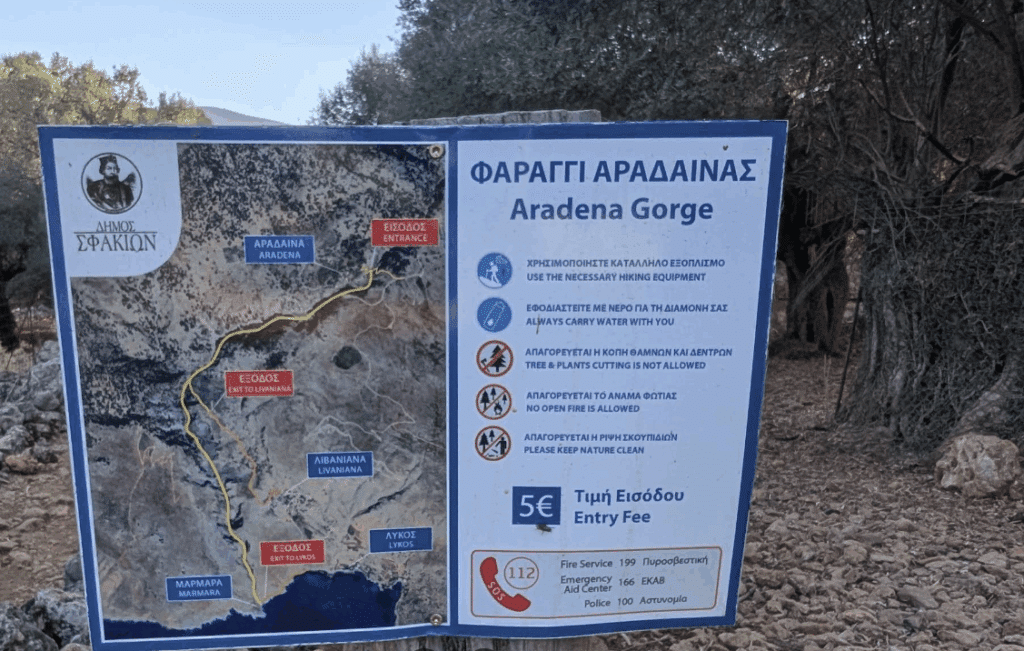
Nevertheless, it is no less exciting and scores with its barren beauty. Perhaps precisely because it is somewhat more difficult to access, it is one of the highlights of hiking in Crete.
- Difficulty: difficult
- Length: approx. 8 kilometres
- Duration: approx. 4 hours
- Suitable for: Experienced hikers, fit and sure-footed beginners
You can hike through the gorge in two ways. Either you start at Marmara Beach and walk up the gorge, or you start in the village of Aradena and walk down the gorge towards the beach. Either way, the Aradena Gorge is a unique experience.
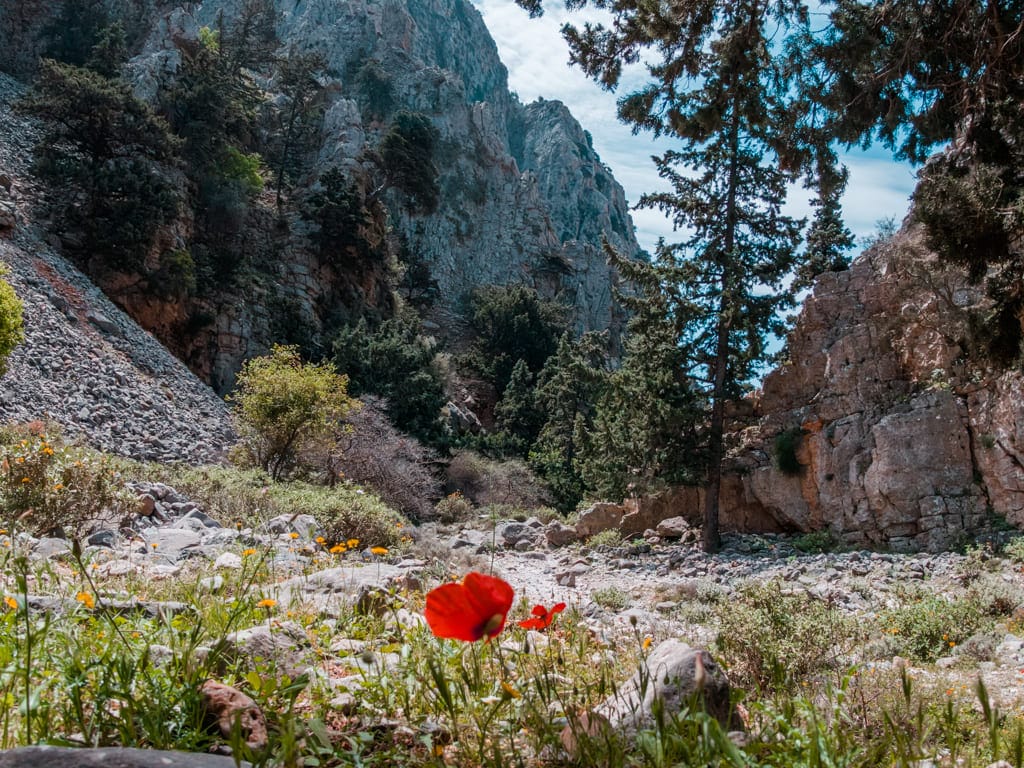
The path leads over large rocks, which you have to negotiate with considerable skill and sure-footedness, along majestic rock faces and through scree deserts with wild vegetation.
Exhausted from hiking? Relax in the best hotels in Crete
A particularly tricky spot is a high rock face that has to be climbed using two ladders, with ropes securing the descent on the other side. Not for people with a fear of heights and definitely not for children.
If you don’t feel confident enough to use the ladders, you can bypass them via a narrow path. However, this is not exactly easy either.
Both sides of the Aradena Gorge are highlights in their own right. At Marmara Beach, you can cool off either before or after hiking in Crete and recharge your batteries at the tavern. In the sparsely populated village of Aradena, dilapidated houses and old churches bear witness to the village’s heyday in the 1940s.
Tip: There is a bridge over the Aradena Gorge from which bungee jumps into the gorge are offered. A completely different and adrenaline-fuelled way to experience the Aradena Gorge in Crete.
Zakros Gorge
The Zakros Gorge in eastern Crete sounds a little scary at first: it is called the Valley of the Dead. But don’t worry, no hiker has ever died in this Cretan gorge. Around 4,000 years ago, the Minoans buried their dead in rock caves in the gorge. Hence the name.
Today, you can experience the Minoan rock tombs up close while hiking through the Zakros Gorge in Crete and, like many others, wonder how the Minoans managed to carry their dead up the gorge walls.
- Difficulty: easy to moderate
- Length: approx. 9 kilometres
- Duration: approx. 3.5 hours
- Suitable for: experienced hikers, fit and sure-footed beginners
The tombs are carved into the red rock at an altitude of several hundred metres. An exciting sight, not only for archaeology and history enthusiasts.
The path through the Zakros Gorge takes you from the small village of Zakros down into the valley, past a knee-deep stream, fragrant herbs, blooming flowers such as oleander and high rock faces to the beach of Kato Zakros. There you will find the remains of a Minoan palace, which is well worth a visit. Numerous taverns await guests and a dip in the sea will refresh you for the return journey.
Although the path through the Zakros Gorge seems easy at first, it does involve some scrambling over rocks and is a challenge, especially in high summer when temperatures are very high. Therefore, remember to bring plenty of water, sunscreen and sturdy shoes.
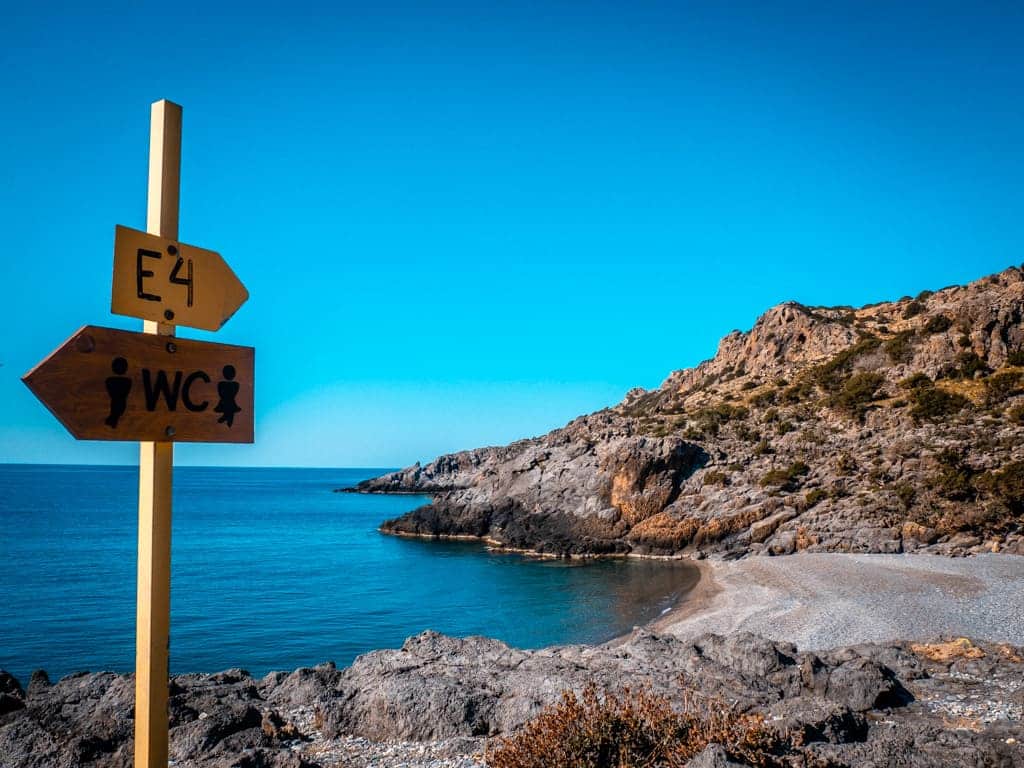
Note: The path through the Zakros Gorge is the last part of the European long-distance hiking trail E4, which ends at Kato Zakros beach.
If you are reasonably sure-footed and physically fit, and have good hiking boots, you will have a lot of fun hiking through the Kritsa Gorge in Crete and feel a bit like an adventurer. Incidentally, the Kritsa Gorge is open all year round and can also be hiked through in winter. In summer, it is pleasantly cool and shady here.
Tip: There is also a short tour through the Kritsa Gorge, which is ‘only’ about 5 kilometres long.
You can also hike this route in Crete individually and master it without a guide. When you reach the game enclosure, simply turn right and follow the wide path out of the gorge. Your return route takes you above the gorge back to the starting point and offers you a spectacular view of the gorge.
Karfi Mountain Circular Trail
On the Lassithi Plateau, Karfi Mountain attracts hikers in Crete with its barren but archaeologically significant landscape.
Starting from the village of Tzermiado, the route initially follows a fairly unspectacular asphalt road towards the Nissimos Plateau until the unpretentious beauty of the mountains unfolds and you slowly and leisurely climb higher and higher towards the 1,117-metre-high Karfi Mountain. Along the way, you will encounter simple vegetation, a church dedicated to Saint Ariadne and one of the oldest Minoan settlements in Crete.
- Difficulty: easy to moderate
- Length: approx. 8 kilometres
- Duration: approx. 3 hours
- Suitable for: beginners
This is a particular highlight for archaeology enthusiasts when hiking in Crete. At the summit of Karfi, you can enjoy a fantastic view of the Lassithi Plateau and a reservoir.
The Karfi circular hiking trail is ideal for beginners and one of the best tips for hiking in Crete in April, May or October. Then it is not as hot as in midsummer and the hike can even be undertaken with slightly older children.
Tip: You can also hike on Karfi in Crete in winter. The climate in Crete is very suitable for hiking at this time of year.
Tips for hiking in Crete
And finally, a few general tips for hiking in Crete:
- Remember that you may not always have mobile phone reception, especially in the gorges. If you want to leave the marked trails, a GPS device is recommended.
- Always take enough drinking water with you: at least one litre for shorter routes and at least two litres for full-day tours. You need plenty of fluids, especially in warm temperatures.
- Even on easy hikes, the ground is often covered with scree and can be dusty. Hiking boots are a better choice than trainers or flip-flops.
- The best times for hiking in Crete are spring, late autumn and winter. Pachnes is often covered with snow in winter.
Which part of Crete is best for hiking?
The most popular hiking areas in Crete include the Samaria Gorge National Park, the foothills of the White Mountains, the south coast of Crete, the summit of Koukoule and the Aradena Gorge.
When is the best time to go hiking in Crete?
The best time to go hiking in Crete is between April and mid-June, as well as September and October. During these months, temperatures are pleasant, the countryside is covered in wildflowers and the island is less crowded. The high season in July and August can be very hot, while rain and snow are possible in the mountains during winter.
Which gorge in Crete is suitable for hiking?
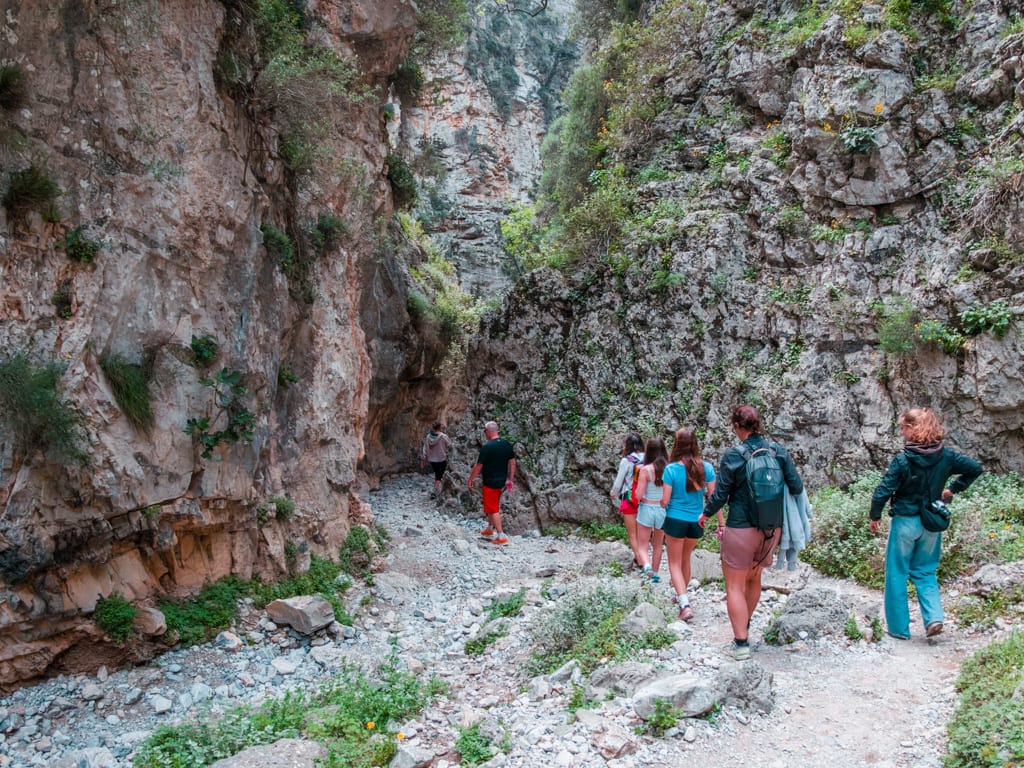
The Samaria Gorge and the Imbros Gorge are the best known for hiking in Crete, with the Samaria Gorge being the longest in Europe at 17 km, but also more physically demanding. The Imbros Gorge is shorter, easier to navigate and also suitable for children. Other, lesser-known gorges are the Kritsa Gorge and the Sarakina Gorge.
Hiking trail around Cape Kako Mouri – An Easy hike in Crete
The circular route around Cape Kako Mouri is one of the lesser-known hikes for a holiday in Crete. Completely unjustified, because just a few minutes after setting off, you reach a height from which you have a fantastic view of the turquoise blue sea and the picturesque bay of Plakias.
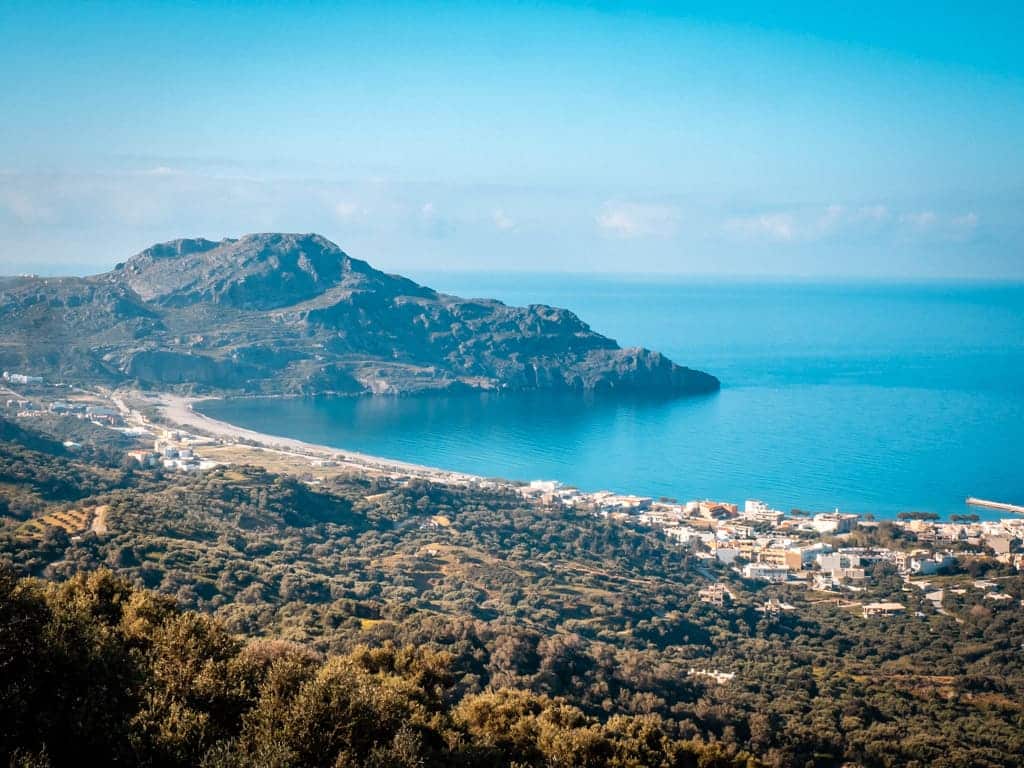
Be sure to take some time to swim in the bay of Kalypso Cretan Village and enjoy the sun on Damnoni Beach.
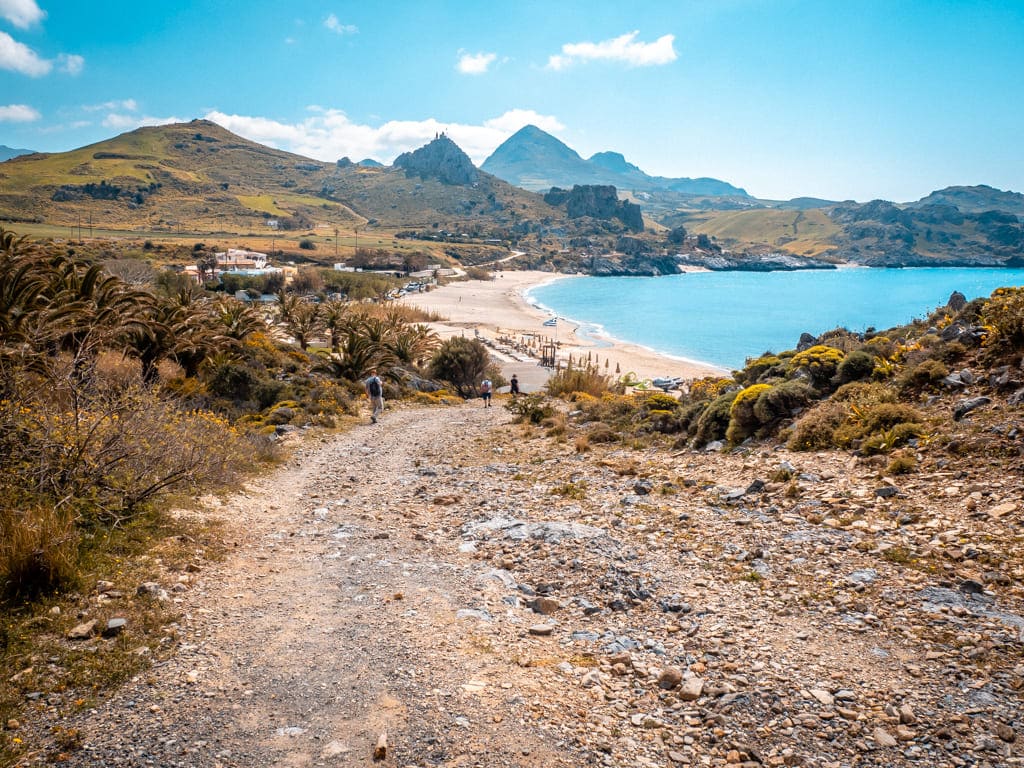
This tour is certainly not going to be crowded, but with a bit of luck you will be accompanied by goats for part of the way.
- Distance: 6.5 km
- Duration: 2-2.5 hours plus breaks
- Elevation difference: approx. 220 metres
- Starting point: Plakias Bay Hotel
- Suitable for families, but not for small children
European long-distance hiking trail E4
The E4 European Walking Path in Crete is about 500 km in total, beginning at Kastelli-Kissamos in the west and ending at Kato Zakros in the east.
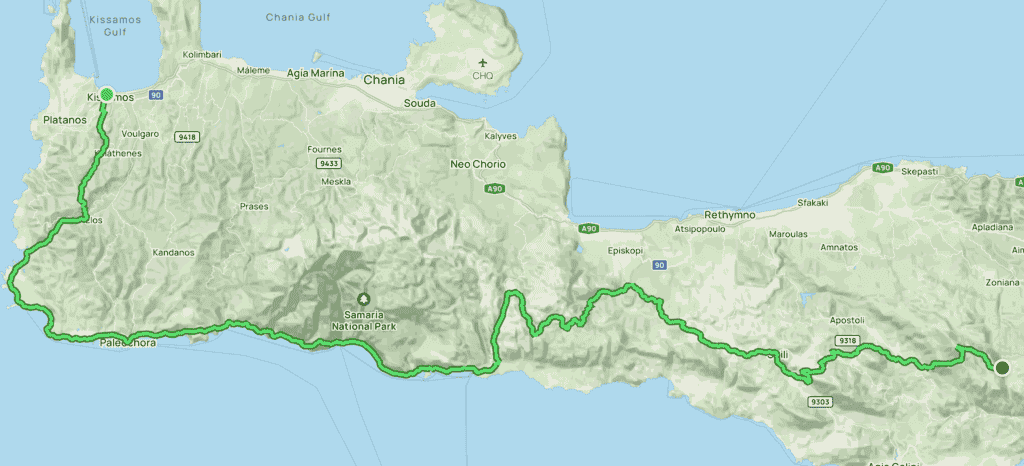
The path runs from Kastelli-Kissamos in western Crete to Kato Zakros in the east, offering a challenging trek through diverse landscapes including mountains, gorges like Samaria Gorge, and coastal areas. Hikers will encounter varied terrain and should be experienced, as signage can be inconsistent, and local advice is crucial for safe trekking.
- Difficulty: moderate to difficult
- Length: 500 km
- Duration: depending on the stage
- Suitable for: depending on the stage
Since 1970, the European long-distance hiking trail E4 has run across Crete for 500 kilometres, and many who hike on Crete walk the E4 without knowing it. The E4 crosses several popular hiking trails on Crete and is ideal for individual hiking on Crete.
Note: Unfortunately, the E4 on Crete is somewhat neglected, which is why some passages are overgrown and difficult to walk on. In addition, the E4 is not a leisurely hiking trail and is predominantly rough and uncomfortable. It is therefore largely unsuitable for beginners.
Of course, I cannot talk through the entire 500 kilometres of the E4 here, so I will only give you a few tips for hiking the E4 in Crete. A particularly beautiful part of the E4 in Crete is around the ‘White Mountains’ Lefka Ori.
Here you can hike from Elafonisi along the southern coast of Crete and find not only some well-known Crete beaches but also secluded bays and small villages where you can take a break.
The E4 is a great way to combine hiking and swimming in Crete. On the E4’s coastal route, you will also pass various gorges for hiking in Crete. Among others, the Sougia Gorge, the Imbros Gorge and the famous Samaria Gorge are on the way.
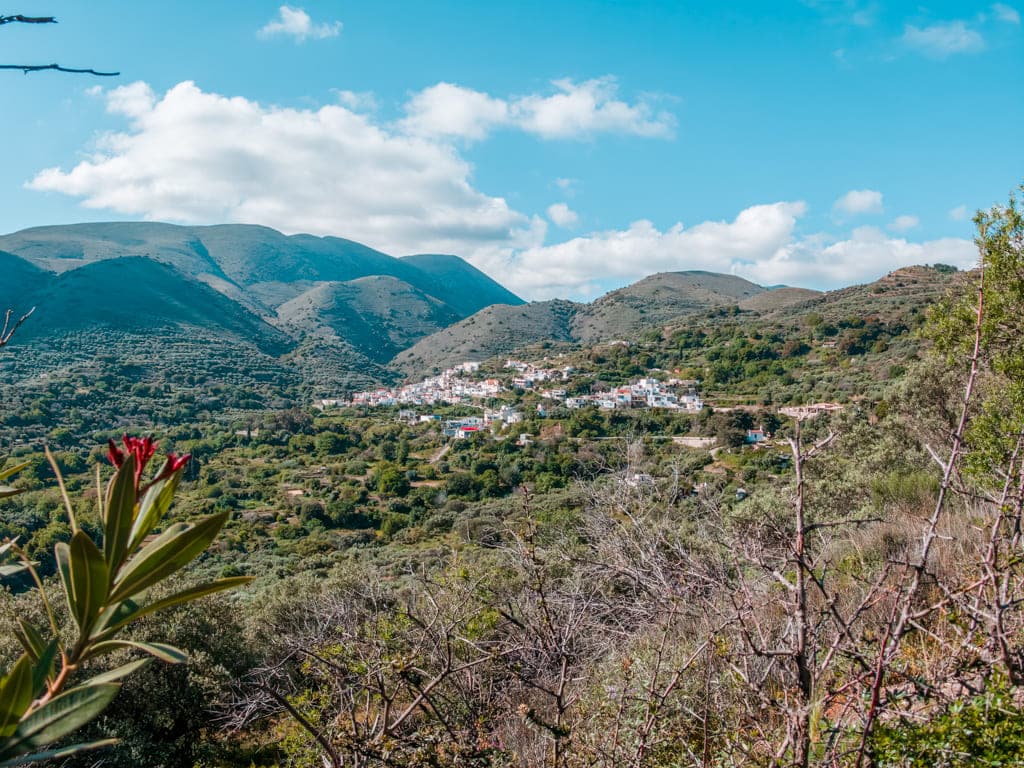
Experienced hikers can set off for the White Mountains from the village of Choria Skafion. However, I recommend joining a guided hike or at least hiking in a group in Crete. A GPS device is mandatory here.
In eastern Crete, the E4 leads to the Lassithi Plateau, one of the most important archaeological sites on the island and home to the Cave of Zeus, where, according to legend, the main Greek god was born.
If you want to hike on the Lassithi Plateau in Crete, you should be prepared for little tourist infrastructure, but also for interesting scenic and historical impressions. This part of the E4 leads into the Cretan mountains and should therefore only be chosen by experienced hikers or as part of a guided hike.

Hi. I’m Dirk, adventure traveller, originally from Germany. In 2020, Island Hopper Crete, started as a Greece travel blog. In 2022, I founded a small travel agency in the Balkans to complement my recommendations with some of the best experiences that I found, organized by local partners and friends.
 English
  Français
  Nederlands
  Español
  Polski
  Svenska
  עִבְרִית