
Explore the 10 Best Things To Do on Rhodes Island
Located off the southern coast of Turkey, the island also attracts culture lovers, connoisseurs and active travellers to the sights and attractions of Rhodes thanks to its diversity and world cultural heritage. Discover the best things to do and see on the island – from the east coast to the west coast!
Rhodes is the largest island in the Dodecanese archipelago. Greece’s fourth-largest island owes its nickname, ‘Sun Island’, to its approximately 300 days of sunshine per year. The impressive natural landscape and endless beaches magically attract families, couples, and solo travellers all year round.
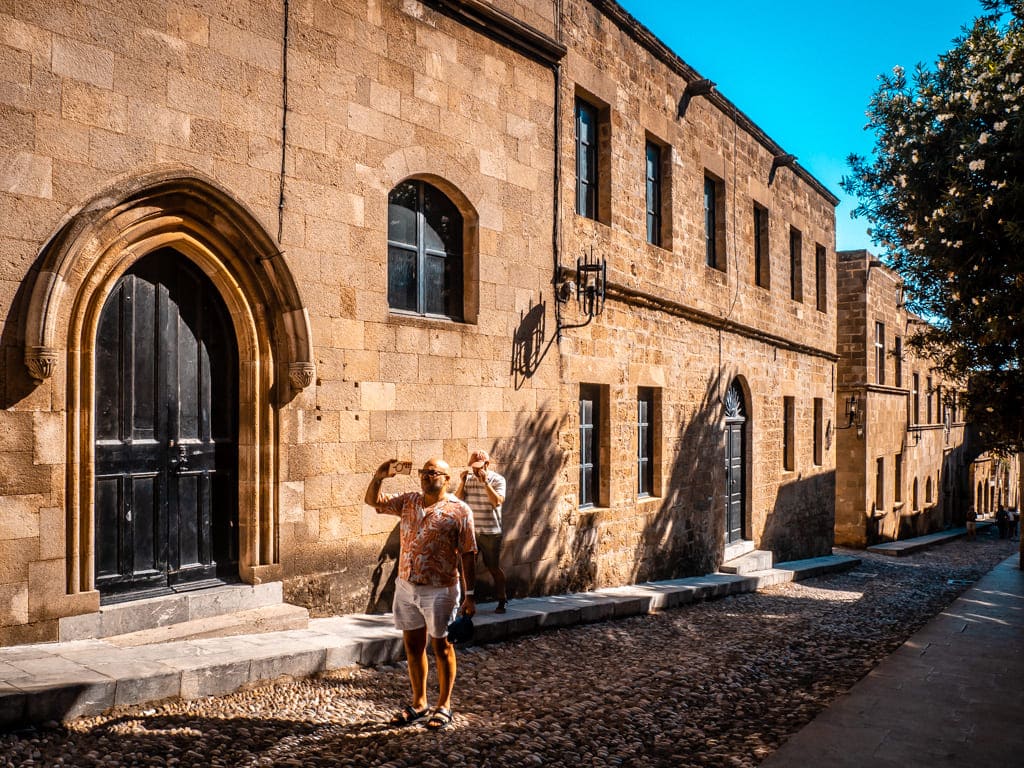
Rhodes is one of the most popular islands in Greece and one of the top travel destinations in Europe. This is not only due to the fantastic weather and beautiful beaches, but also to the varied sights that the island has to offer. The island’s distinctive atmosphere is particularly evident in the beautiful medieval town of Rhodes.

By Dirk Pohlers, balkan traveller from Germany. I visit every place I write about & share real tips, photos, & advice from my trips.
Table of Contents
Where is the most beautiful place on Rhodes?
Rhodes has countless beautiful places. However, the most popular holiday resorts on the island of Rhodes are all located on the east coast. Starting from Rhodes Town and heading southwest, these are Faliraki, Afandou, Kolymbia, Kallithea, Lindos and Lardos. The famous Anthony Quinn Bay, the beautiful St. Paul’s Bay and Tsambika Beach are also located here.
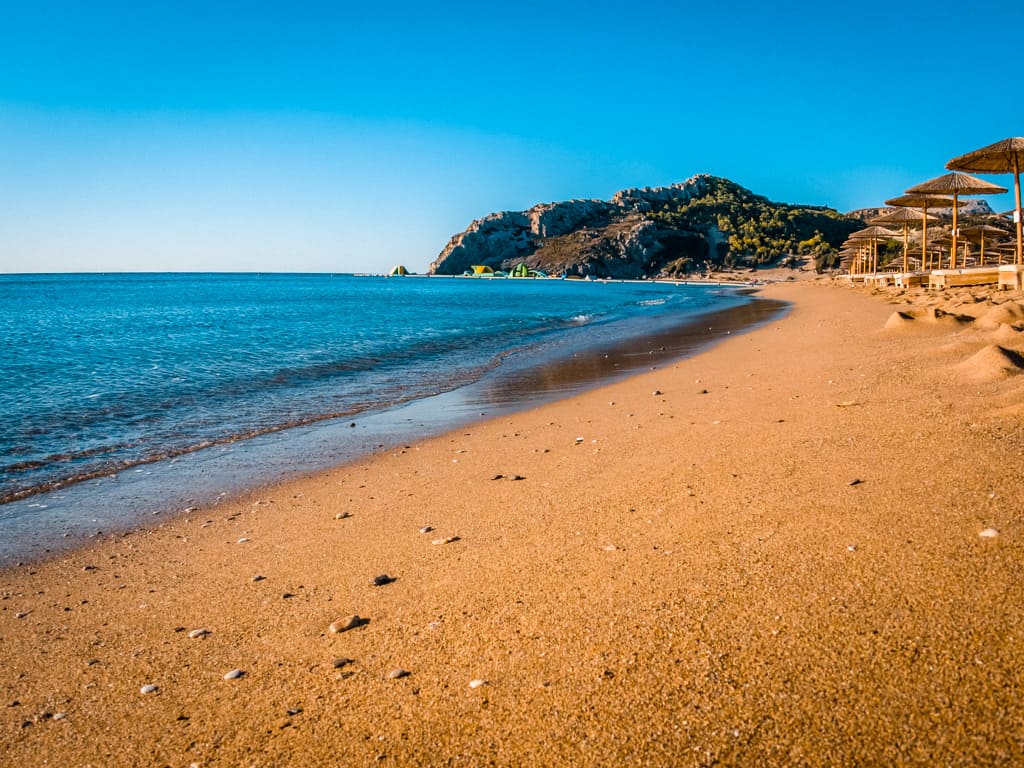
The beaches on this side are nice and wide and there is a wide range of tourist attractions. It is also less windy here than on the west coast, so the sea is calmer. Surfers and travellers who particularly value peace and quiet will probably be drawn to the west coast, where it is greener and the temperatures are slightly cooler.
In Short – What should you definitely see on Rhodes?
If you’re holidaying on Rhodes, don’t miss the following things to do, sights and activities:
- Sightseeing in Rhodes Town: The historic old town of Rhodes is definitely worth a visit. Stroll through the beautiful medieval streets, follow in the footsteps of the ancient knights and explore the impressive Grand Master’s Palace.
- Relax at the Kallithea Thermal Springs: Every visitor to Rhodes should see the former Oriental-style spa. This wonderful setting is perfect for relaxing on the beach. It is also a great place for snorkelling.
- Stroll through the streets of Lindos: Lindos is famous for its picturesque alleys, beautiful white houses and, of course, the breathtaking Acropolis, which towers majestically over the village.
- Hiking at Epta Piges: The Seven Springs are one of the most popular destinations on Rhodes. Here, near Kolymbia, visitors will find a true hiking oasis in the lushest greenery of the Mediterranean.
- Snorkelling in Anthony Quinn Bay: The picturesque bay in the north-east of the island is an ideal spot for snorkelling, not least because fishing is prohibited here. Crystal-clear, turquoise-shimmering water and many large and small rocks provide a dreamlike backdrop for your holiday in Rhodes.
- Marvel at the Valley of the Butterflies: From June to September, huge numbers of butterflies are attracted to the resinous scent of the Oriental amber tree in this wildly romantic valley. As you hike through the woods, past beautiful waterfalls, you can marvel at the butterflies that cover the tree trunks like a patterned carpet.
Rhodes Town – See the Colossus of Rhodes
Mandraki, the modern part of the town, is located at the northern tip of the east coast of Rhodes, along with the harbour. Here you can admire three picturesque windmills and one of the Seven Wonders of the Ancient World, the Colossus of Rhodes. Curiously, the 30-metre-high bronze statue of the sun god Helios no longer exists today: the Colossus was completely destroyed by an earthquake in 226 BC, only 66 years after its construction, and no remains exist.
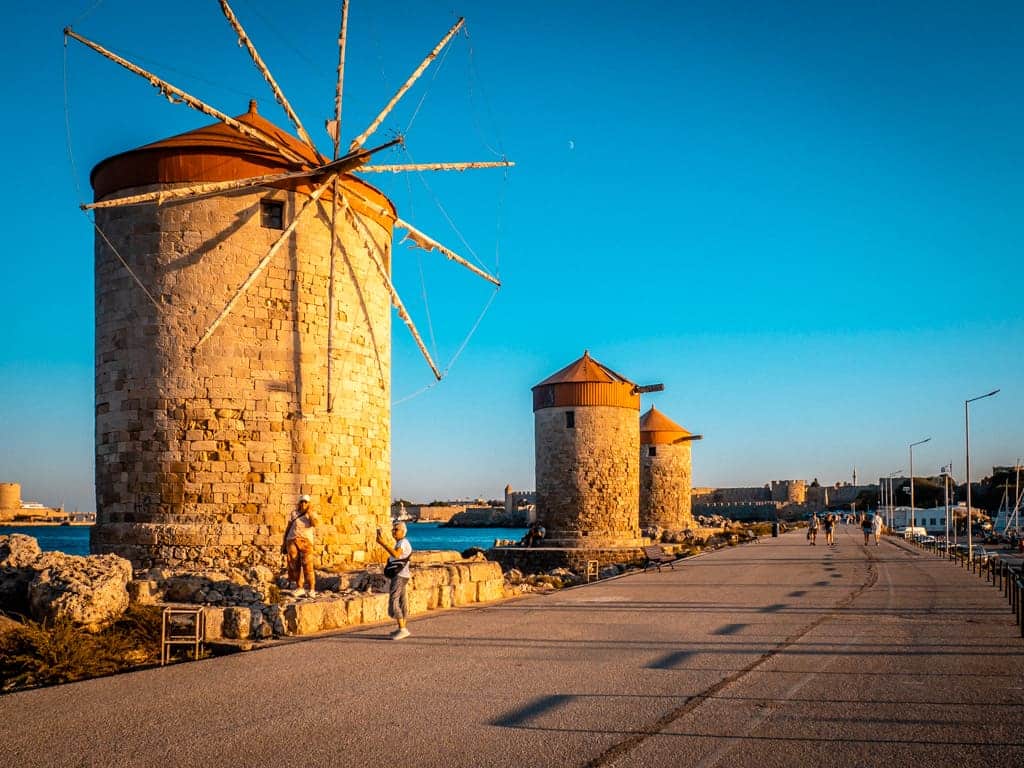
Today, two smaller stone columns with statues of a doe and a fawn, the heraldic animals of Rhodes, flank the harbour entrance. If you enjoy the fresh sea air at the harbour early in the morning, you can see the locals fishing.
Rhodes’ Old Town – A reflection of turbulent times
One of the highlights among Rhodes’ sights is the Old Town of Rhodes Town, a UNESCO World Heritage Site since 1988. Numerous occupiers have left their mark here. Buildings from the Middle Ages nestle alongside those from the Ottoman occupation from 1523 to 1912.
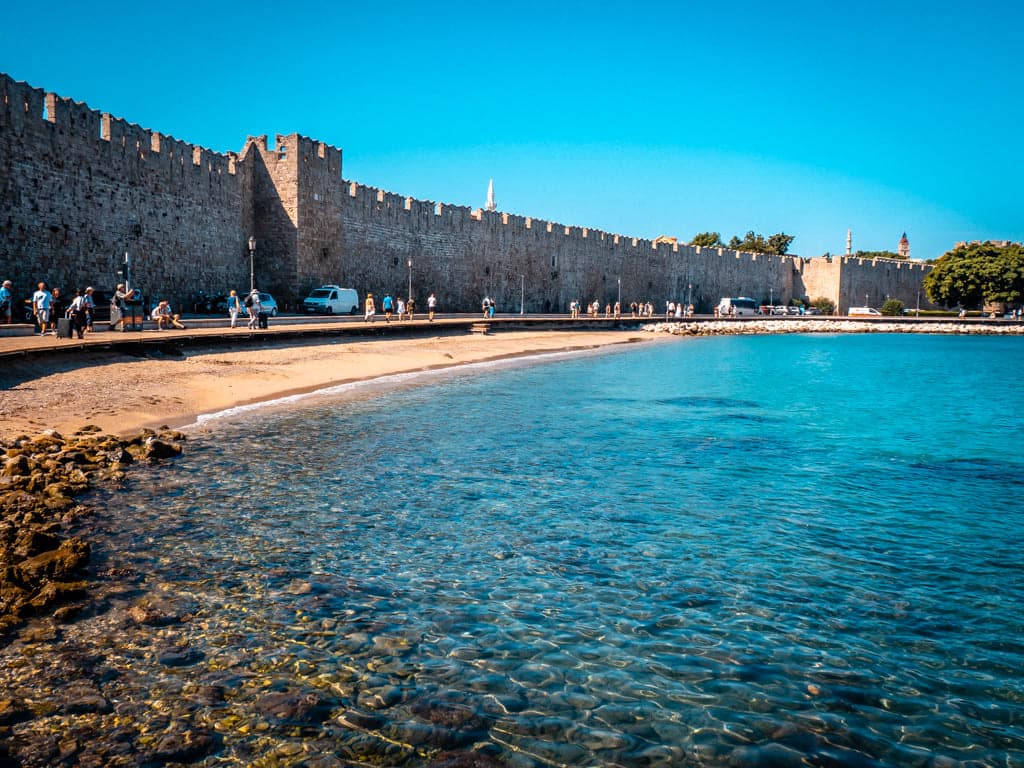
But hardly any era shaped the city more than that of the Knights Hospitaller, which began in Rhodes at the beginning of the 14th century and lasted for around 200 years.
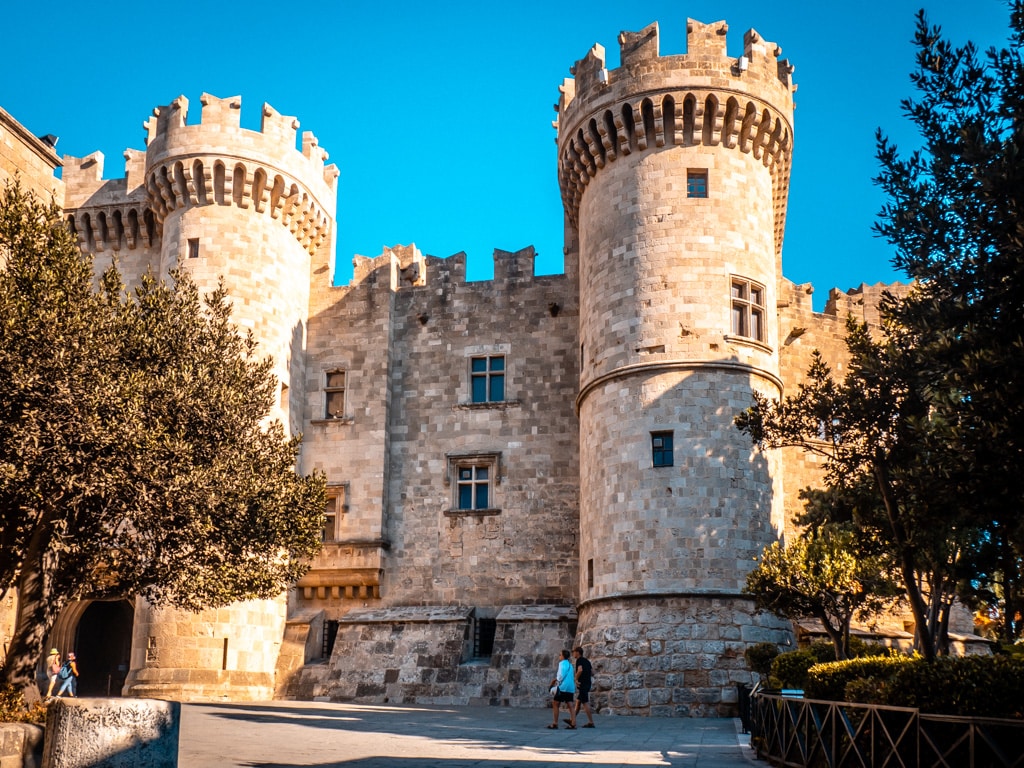
Well-preserved buildings and fortresses, the imposing city walls and, last but not least, the medieval knights’ street – ‘Odos Ippoton’ – bear witness to a time when trade flourished. Other sights that await you on your holiday to Rhodes Town:
- Hippocrates Square
- the Owl Fountain
- the old hospital with its archaeological museum
- the lower town with its narrow streets, shops, cafés, and restaurants
- the Kahal Shalom Synagogue
Tip: A day trip to the island of Symi is also well worth it.
The Grand Master’s Palace: Rhodes’ highlight in the old town
At the end of Knight Street, you will find what is probably the most historic relic from the time of the Knights Hospitaller. The Grand Master’s Palace in Rhodes’ old town was built in the 14th century and served as a medieval residence, administrative headquarters, prison and ammunition depot. In 1856, large parts of the building were destroyed in an explosion. It was rebuilt under Italian rule, with only the main portal remaining in its original form. Historians still puzzle over whether the Colossus of Rhodes was actually located inside the Grand Master’s Palace…
Tip: The Grand Master’s Palace is open daily from 8 a.m. to 8 p.m. from April to October. From November to March, it is closed on Mondays and open from 8 a.m. to 3 p.m. on all other days. Regular admission costs €6 at the door.
More sights and attractions on Rhodes
Acropolis of Lindos – Impressive architecture and stunning scenery
The third most visited archaeological site in Greece is also one of the most picturesque, containing traces of more than five thousand years of history.
- Location: Acropolis of Lindos
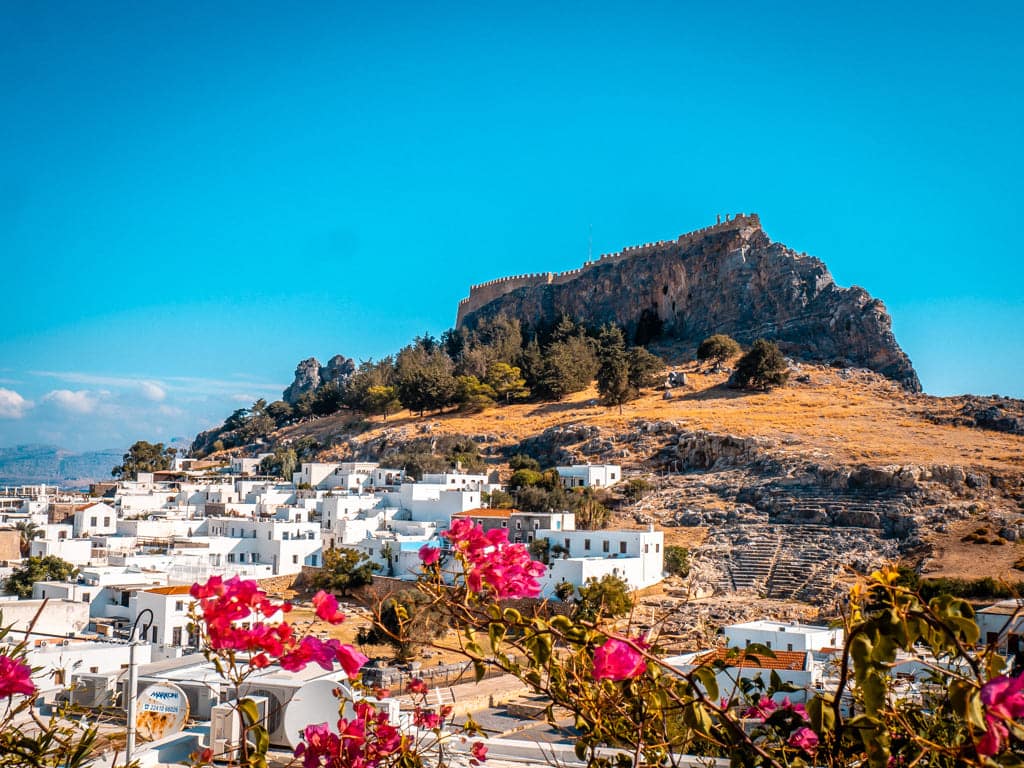
The Acropolis of Lindos and the listed village of the same name at its foot are an absolute must-see when visiting Rhodes. The extremely authentic village is located 45 km from the city of Rhodes in a beautiful bay dotted with fabulous sandy beaches.
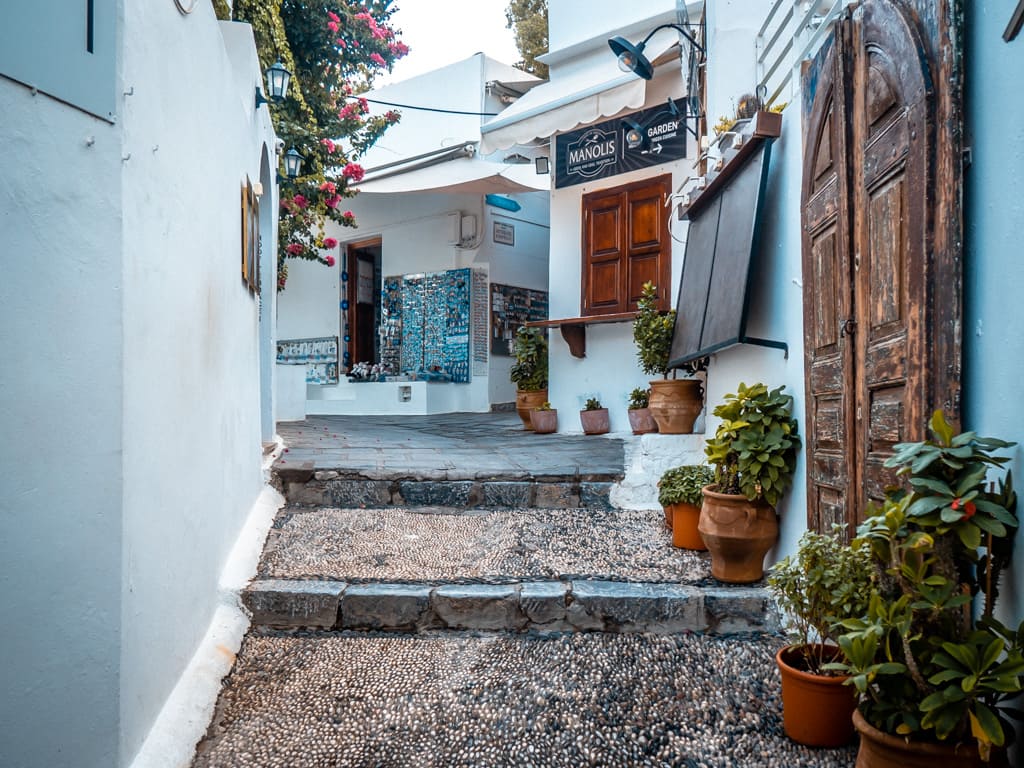
It is a very charming place with cobbled alleys and whitewashed houses in typical Greek style sloping down to the sea. However, Lindos is not only a world-famous holiday resort, but also a place of great historical interest.
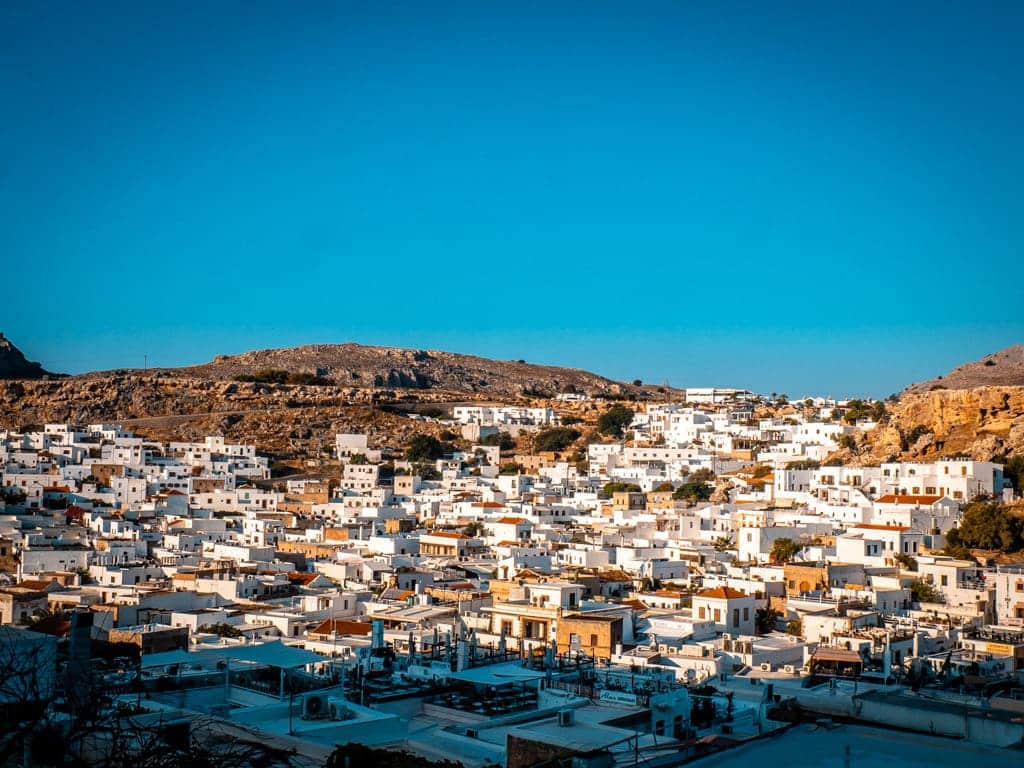
Whether you undertake the somewhat arduous climb on foot to the impressive fortress or opt for the more comfortable ride up on a donkey, a highly interesting archaeological site and an unforgettable view await you at the top. The village of Lindos was built on the ruins of ancient Lindos. However, the Acropolis of Lindos is the most prominent monument. It is the monumental citadel of the sanctuary of Athena Lindia, famous in ancient times, which later became the Crusader fortress of the Knights of St John.
The Seven Springs of Rhodes
The Seven Springs of Rhodes invite you to hike through a magical landscape and provide a refreshing change of pace during your island holiday.
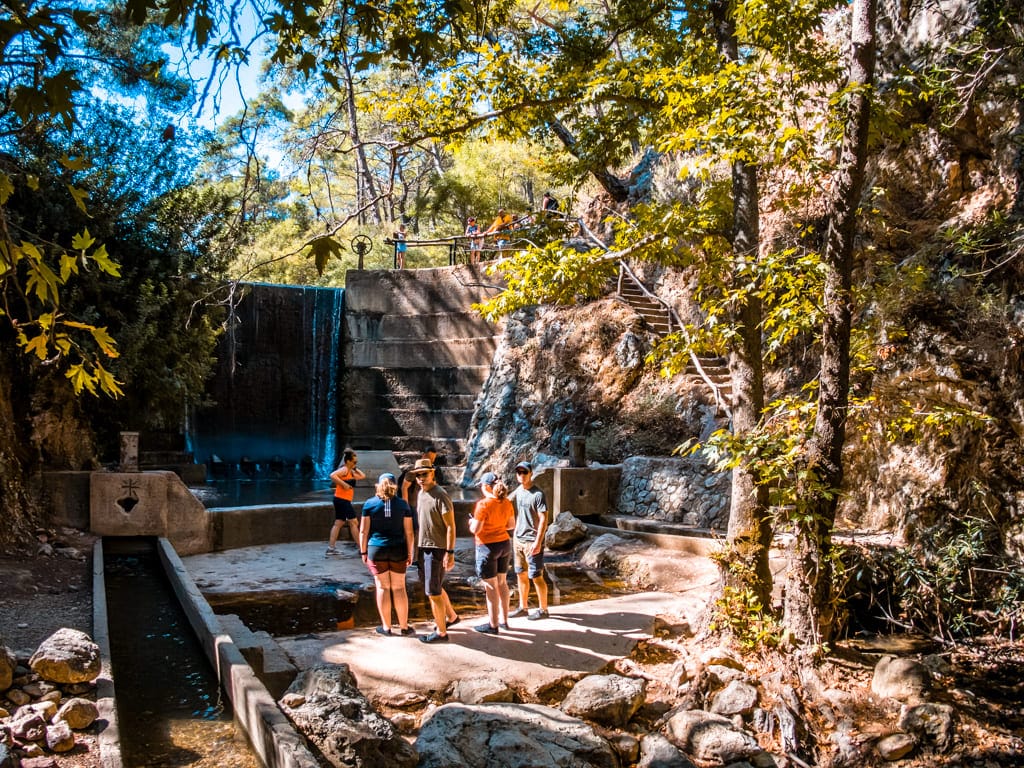
The seven springs (Epta Piges) near the resort town of Kolymbia are one of the most charming destinations on the island of Rhodes. Visitors will find a real oasis here in the lush greenery of the Mediterranean. You can stroll along beautiful forest paths, follow the course of the natural springs and take a refreshing dip in the freshwater lake formed by a dam. In these beautiful surroundings, you can observe many animals up close, such as peacocks, turtles and geese, as well as smaller creatures such as crabs and fish. The highlight of the excursion is the hike through a narrow, dark tunnel that leads to the lake where the seven springs converge.
Tip: If you decide to venture on the popular tunnel hike, you should not be claustrophobic and bring a torch and waterproof shoes. If necessary, you can also go barefoot.
Valley of the Butterflies – A fascinating natural spectacle on Rhodes
In the Valley of the Butterflies on Rhodes, you can enjoy the beauty of nature and explore the life cycle of these beautiful creatures.
- Location: Valley of Butterflies Rhodes
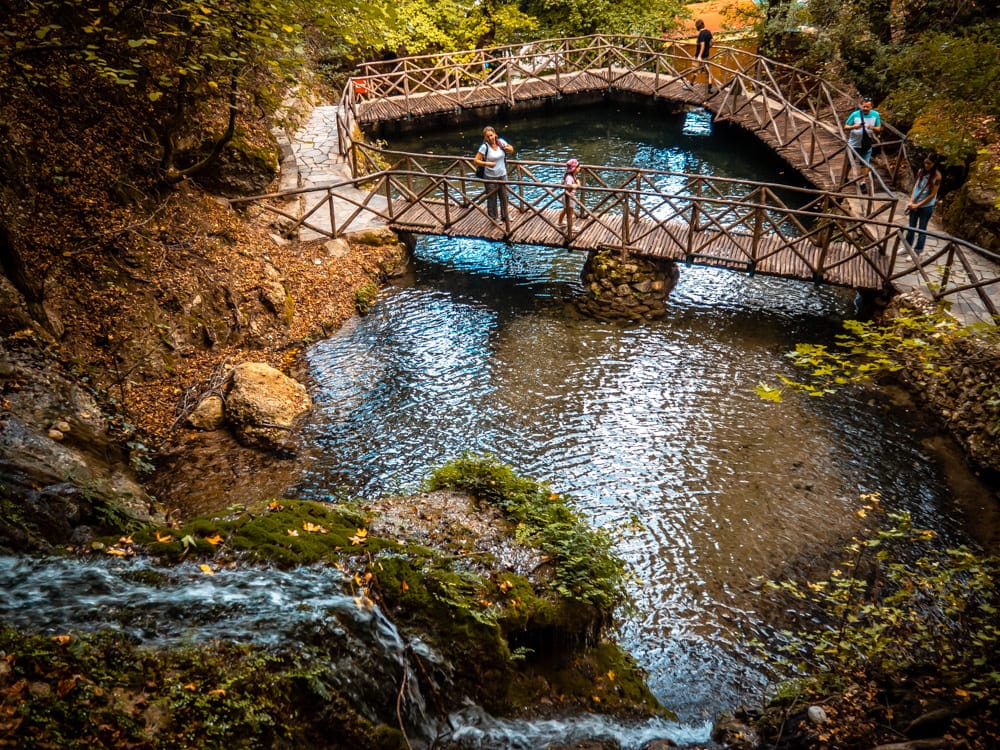
The Valley of the Butterflies (Petaloudes) on Rhodes is known worldwide as a summer retreat for millions of butterflies. It is a habitat with dense vegetation, breathtaking natural beauty, bridges that blend harmoniously into the surroundings, ponds, small waterfalls and a peaceful atmosphere. A unique experience for visitors, who will be enchanted by the sound of cicadas and the murmur of cool water.
The area is famous for its natural beauty, but the valley’s main and unique feature is the zitia plant and the specific substances it secretes, which attract butterflies, especially those of the Panaxia quadripunctaria species. Visitors can witness a spectacular phenomenon that rarely occurs in nature. Huge numbers of butterflies gather in this small valley during the final phase of their life cycle.
Insider Tip: Asklipeiou, the authentic village on Rhodes
Asklipeiou is a charming village in the lowlands of eastern Rhodes, not far from the rapidly growing town of Kiotari on the coast. It is laid out in an amphitheatre-like formation and captivates visitors with its unique natural surroundings.
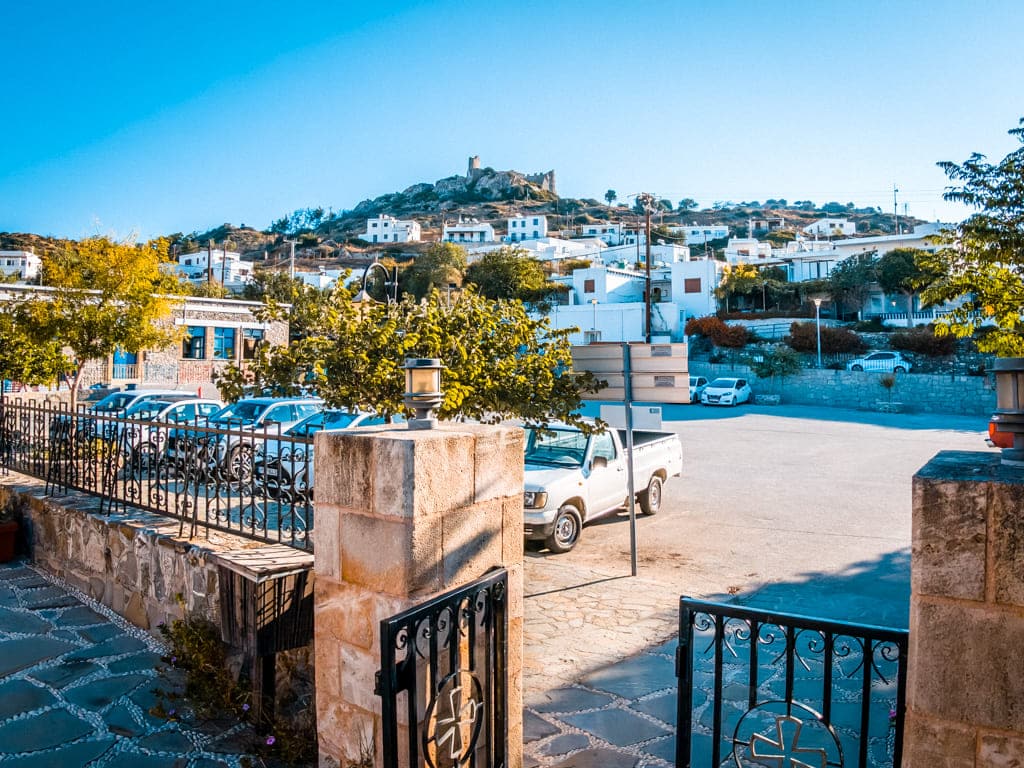
The most notable feature of Asklipeiou is its medieval castle, built in the 14th century by the Knights of St John and originally comprising four towers. Perched on a steep, rocky hill, it was protected by a dry moat and was partially restored by the Italians in the early 20th century.
In the centre of the village stands the Byzantine church of the ‘Assumption of the Virgin Mary’. The whole village is built around the Byzantine-era Church, which has a restored interior covered in gilded frescoes. The neighboring Folklore Museum is housed in a former olive press and displays antique farming equipment.
Things to do on Rhodes: The most beautiful places & beaches
In addition to Kos and Crete, Rhodes also boasts some beautiful and picturesque bays that you can discover as part of a holiday to Greece:
- Anthony Quinn Bay: Snorkelling south of Rhodes Town
- Traganou Beach: clear water and a cave near Faliraki
- Pefkos Beach: velvety soft sand on the Lindos peninsula
- Ialysos: pebble beach for kite surfing and windsurfing on the west coast
Prasonisi – The rocky peninsula in the south of Rhodes
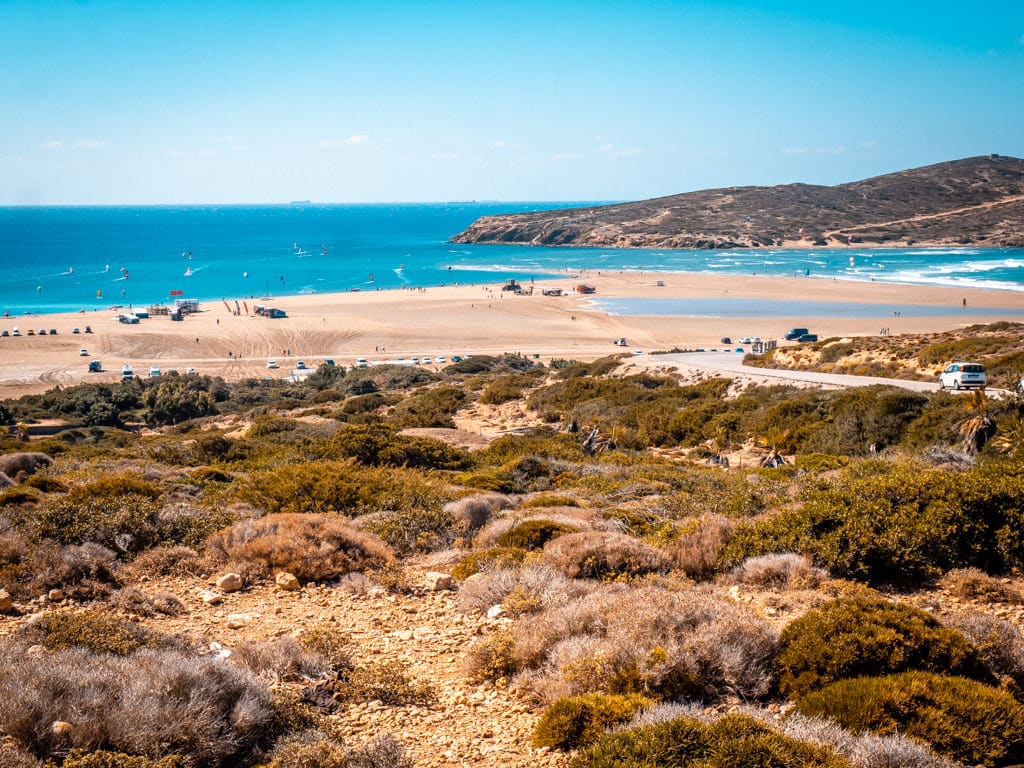
At the southern tip of the island, sun worshippers and windsurfers will find a beautiful sandy beach on Prasonisi, which separates the Mediterranean from the Aegean Sea.
Rental cars & getting around Rhodes

Car hire in Rhodes is available from several international rental companies directly at the airport. Regional providers are often slightly cheaper and will also bring the desired vehicle to the airport. Small cars start at around € 40 per day, depending on the season and model. The longer you hire, the cheaper the daily rate becomes. I like to use DiscoverCars to compare rental cars:
As most roads on Rhodes are paved, an off-road vehicle is not absolutely necessary. During the peak season in July and August, I recommend reserving a vehicle in advance from home before travelling.

Hi. I’m Dirk, adventure traveller, originally from Germany. In 2020, Island Hopper Crete, started as a Greece travel blog. In 2022, I founded a small travel agency in the Balkans to complement my recommendations with some of the best experiences that I found, organized by local partners and friends.
 English
  Français
  Nederlands
  Español
  Polski
  Svenska
  עִבְרִית