
Western Crete: 10 Highlights From Chania to Paleochora
Western Crete is renowned for its lush landscapes and peninsulas with rugged coastlines such as Gramvousa, Rodhoupou and Akrotiri. In spring, the green interior and plateaus such as Askifou and Omalos are transformed into colourful carpets of flowers, while the White Mountains are covered in snow. A perfect idyll and easily accessible.
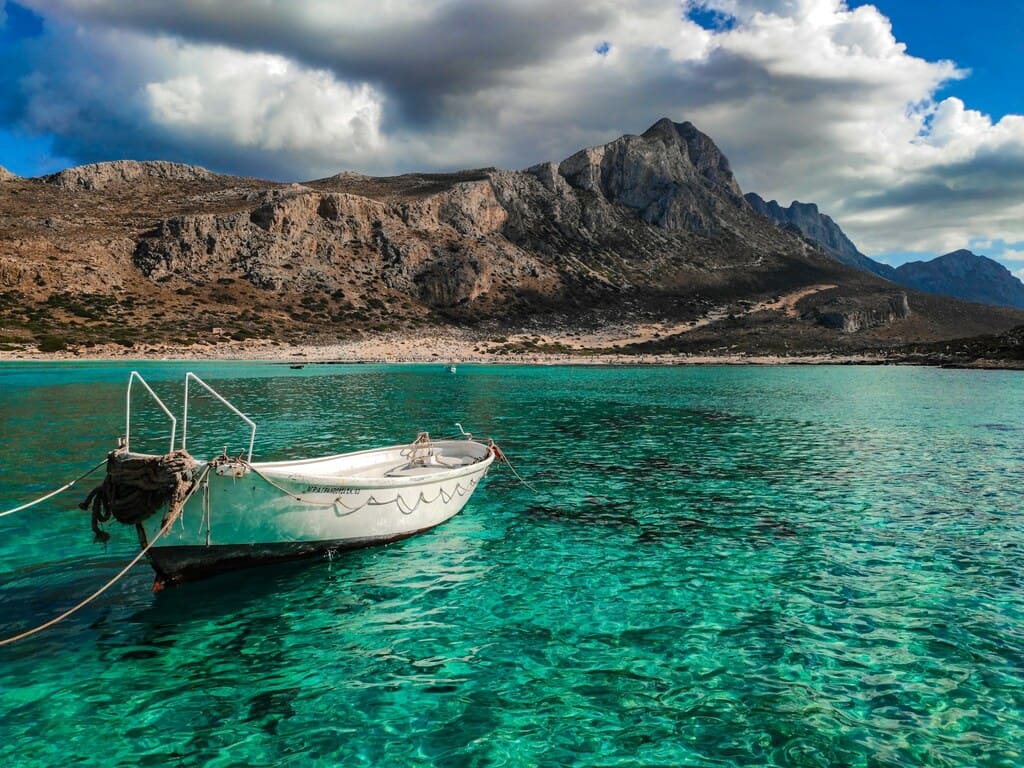
Lively towns where beauty meets history, such as Chania and Rethymnon, a wonderful heritage. Experience more of the sea in the breathtaking nature reserves and their dune beaches such as the Balos lagoon, Elafonissi and Falassarna. Hike in the shade of the gorges of the Agia Irini Gorge and pass through Crete’s largest national park, the Samaria Gorge. You are sure to fall in love with the majestic mountains of the Askifou Plateau and its nature reserves, the largest hiking area in Crete.
By Dirk Pohlers, Greece traveller from Germany. I visit every place I write about & share real tips, photos, & advice from my trips in this Crete travel blog.
Table of Contents
Western Crete – My Travel Guide for Explorers & Nature Lovers
Western Crete is one of the most diverse and impressive regions of the island. Between the Venetian port city of Chania and the relaxed coastal town of Paleochora, a landscape unfolds that is characterised by wild gorges, quiet mountain villages and turquoise blue bays. In this guide, I will take you on a journey through western Crete – with tips on places to visit, nature, culture and culinary highlights.
When is the best time to visit western Crete?
The best time to visit Crete is in spring and autumn. Especially in the months of April to June and October and November, you can expect over eight hours of sunshine per day and pleasant temperatures between 13 °C and 30 °C, as well as only a few rain showers.
- In spring, you will be enchanted by bright green blanket of flowers covering the hills and the snow-capped peaks. Crete in spring (March-May) is ideal for a holiday: The weather is mild (15-25°C), nature is in full bloom with wildflowers, and there are fewer tourists, perfect for hiking (e.g. Samaria Gorge), sightseeing and experiencing authentic village life before it gets too hot in summer and the crowds arrive.
- In summer, you will find plenty of fun on one of the excellent beaches of western Crete. Crete in summer (June-September) means lots of sunshine, high temperatures (often 30°C+), warm water and ideal conditions for beach holidays and water sports. The main season is busy, the east is drier/hotter, the south coast is also hot, with temperatures above 35°C, and activities such as the Palace of Knossos (visit early/late) or beaches such as Vai are attractive. September is a good alternative, as it is still warm but less extreme.
- In autumn, western Crete is ideal for a combination of beach holidays, hiking and culture, as temperatures are mild (often 18-26°C), the sea is still warm for swimming (around 23°C), the beaches are emptier and the island transforms into a vibrant autumn landscape, which is perfect for activities such as wine and olive harvesting. You can explore historical sites such as Chania or Knossos without large crowds, enjoy nature on hikes (e.g. Samaria Gorge) and experience authentic culture at harvest festivals.
The most affordable time to travel to Crete is in spring or winter. In winter, you are invited to the harvest. Western Crete is known for its excellent quality olive oil. The natural splendour of the inland countryside slowly awakens in winter. From November onwards, it turns green again and from February onwards, the first orchids come into bloom in Crete. With over 2000 species of orchids, it is a paradise for amateur botanists.
Food in Crete – Do not miss these Greek specialities
Sfakiani pita. This delicacy is a pastry pocket filled with fresh sheep’s cheese and drizzled with honey. Cheese plays an important role in the Cretan diet. Cheese is even served drizzled with honey as a dessert. Well-known cheeses include Graviera, Ksinomizithra fresh cheese, Pichtogalo Anthotiro and Kefalotiri. For spreading: Malaka, Staka and Tirozouli.
Crete is especially known for:
- Graviera cheese from the mountains
- Honey with thyme from Sfakia
- Wild herbs & stamnagathi (chicory) from the plateau
In villages such as Anidri, Azogires or Temenia, you can still find authentic kafenia, where grandmas sells you their own oil – and maybe even treats you to a shot of raki.
You should also try traditional smoked meats such as apaki and siglina – pieces or stuffed pastries called kalitsounia. Always order seasonal ‘chorta’ to accompany meat. This is steamed vegetables, usually stamangathi, rocket, wlita and purslane. These are dressed with fresh lemon, olive oil and a little salt. This is the real taste of Crete!
10 Highlights in Western Crete
Chania – Visit the buzzing Market Hall
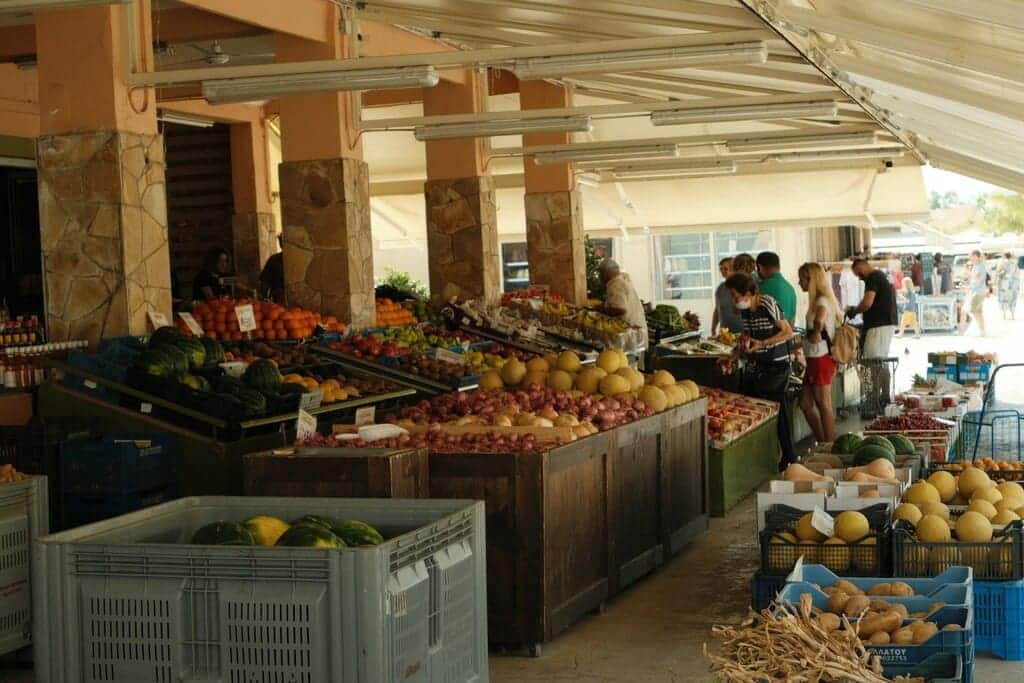
My travel guide for Crete said that the market hall in Chania just about manages to strike a balance between being a tourist attraction with souvenir shops and a supply centre for locals. I didn’t feel that this was the case, as there are actually hardly any shops left for everyday needs. Nevertheless, the market hall in Chania is worth a visit.
At the main entrance to the market hall, you will find a stall selling fresh fruit and vegetables, and you can buy wine and olive oil by the litre. Fresh olives are also available. And if you go a little further to the bakery to buy some bread, you’ll have a delicious lunch that you can enjoy at the harbour in Chania, Crete. I also stocked up on a few local souvenirs here: olive oil, raki, soap and other items are relatively inexpensive here, as almost every shop sells them. However, there are no really special items.
Attractions & Places of interest in Chania:
- Chania Market (Agora): Fresh fruit, cheese, herbs, and olive oil
- The Archaeological Museum in the former monastery
- Chania Lighthouse – a photo opportunity at sunset
The palace of Knossos – The top Archaeological site on Crete
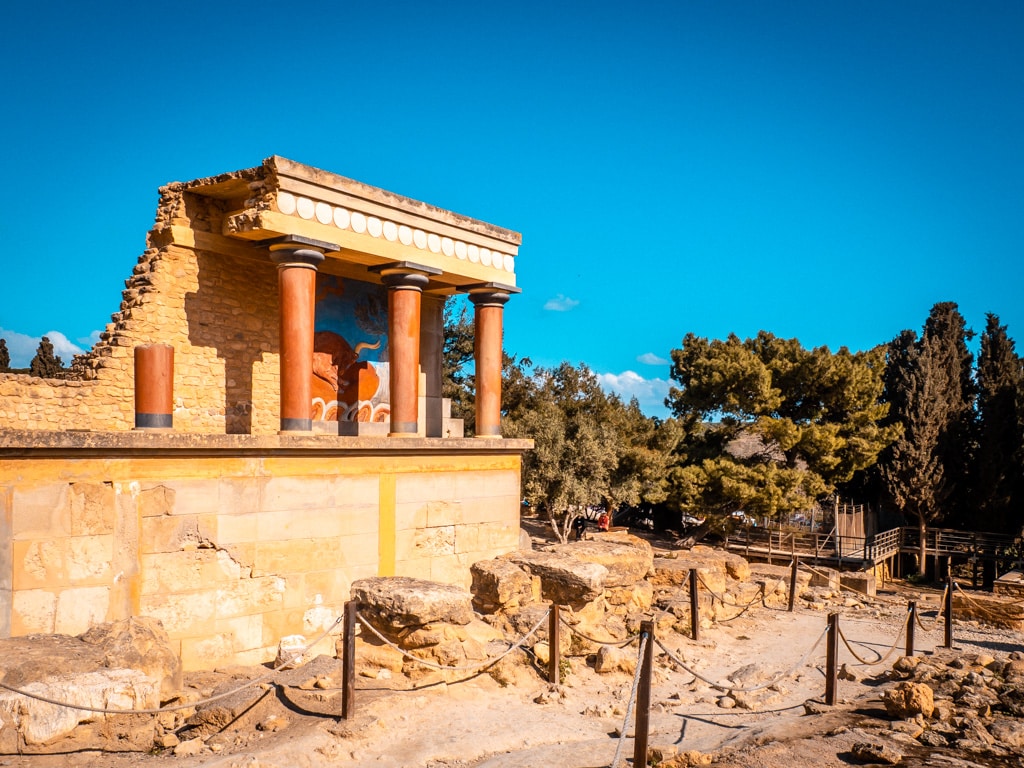
Knossos is the most important ancient city on Crete, but it cannot be compared to other world-famous sites. Nevertheless, Knossos is probably the biggest attraction on Crete. Knossos is an ancient site, with people believed to have lived here as early as the 7th century BC. The site probably reached its peak around 2000 BC, when the Palace of Knossos was built. However, it was first destroyed by an earthquake and then the rebuilt part was destroyed by fire.
At €15 for adults, admission to Knossos is kind of expensive given that the site is rather small. At the entrance, there is a flyer suggesting two tours: 20 or 40 minutes. I found the time a bit tight, especially considering the admission price, and spent around 90 minutes in Knossos.
Georgioupoli on Crete
Georgioupoli is located about 20 kilometres from Rethymno on the north coast of Crete and is particularly popular with Scandinavian beach holidaymakers. It is generally an ideal holiday resort. The sandy beach is several kilometres long, with most holidaymakers gathering on the town beach.
As a beach holiday resort, I didn’t find Georgioupoli, which is also famous for its many eucalyptus trees, all that great because the beach is very narrow, especially in the town, and there is little space for peace and quiet.
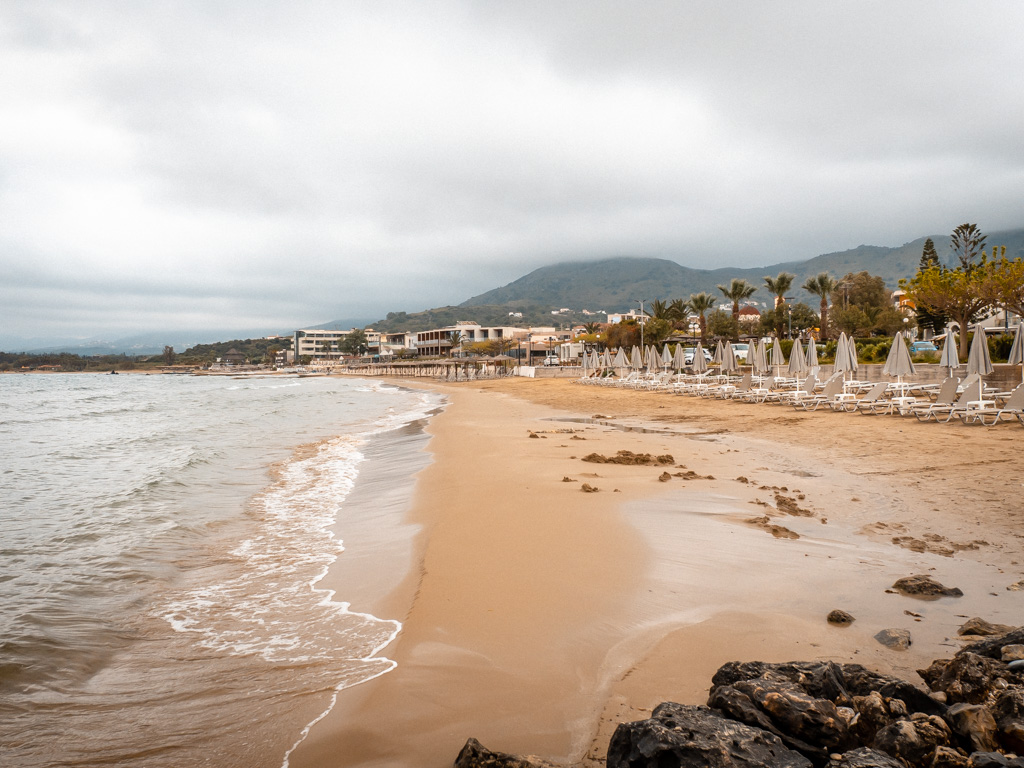
However, the surrounding area is all the more beautiful, especially where the small Almiros River flows into the sea. A wonderful flora and fauna has settled here, which can be explored by pedal boat, for example. With a little luck, you may even see turtles.
The nearby St Nicolas Chapel, one of the sights of Georgioupoli, is also very beautiful. It is a building on the sea. The chapel can be reached via a small footbridge, which should not be walked on barefoot, as it consists of many small and large stones. St Nicolas Chapel is one of the most popular photo motifs in Georgioupoli.
Heraklion – Crete’s vibrant capital city
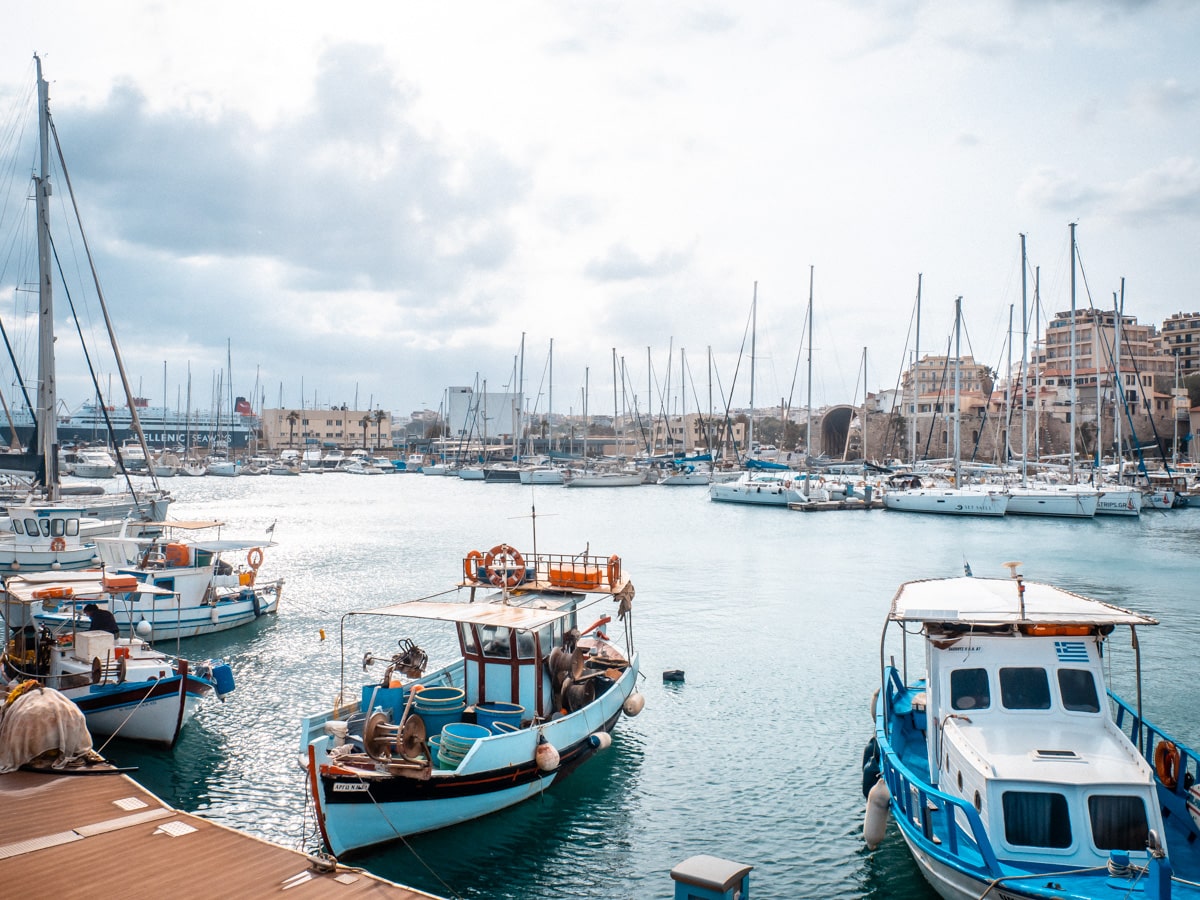
Admittedly, Heraklion, known as Iraklio to the Greeks, is not a beauty at first glance. You have to look closely to discover the charm of Crete’s largest city and capital.
The capital of Crete welcomes you with its Venetian harbour and historic old town – welcome to the lively city of Heraklion, where history and modernity come together.
Top attractions in Heraklion:
- Explore the Minoan Culture at the Palace of Knossos.
- Dive into underwater wonders at CRETAquarium.
- Visit the Archaeological Museum of Heraklion.
- Admire the Port of Heraklion.
- Step into history at the Cathedral of Agios Minas.
- Climb up to Rocca a Mare Fortress.
Hiking through Imbros Gorge in Crete
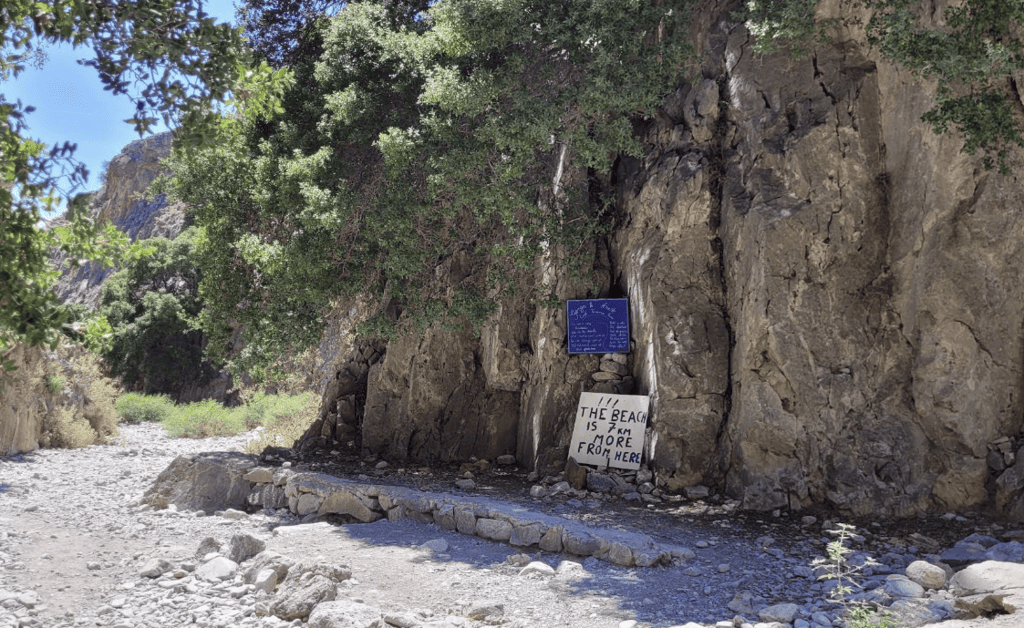
The Imbros Gorge in Crete is far less well known than its big sister, the Samaria Gorge, which is one of the biggest attractions in Crete. At 17 kilometres, it is Europe’s longest gorge.
- Location: Imbros Gorge
I only hiked the Imbros Gorge, so I don’t have anything to compare it to, but it is definitely worth a visit. From the northern parking, the hiking route runs south for around eight kilometres, always downhill towards the mesmerizing sea. At the Porogarago restaurant, stairs lead down directly to the ticket office.
Admission to the Imbros Gorge costs €2. The trail leads over hills, past numerous trees and plants, and there are lots of little butterfly hotspots that are stunning to look at. The hike took me just under two hours and was easy to do. If you’re not quite so good on your feet, you should allow a little more time.
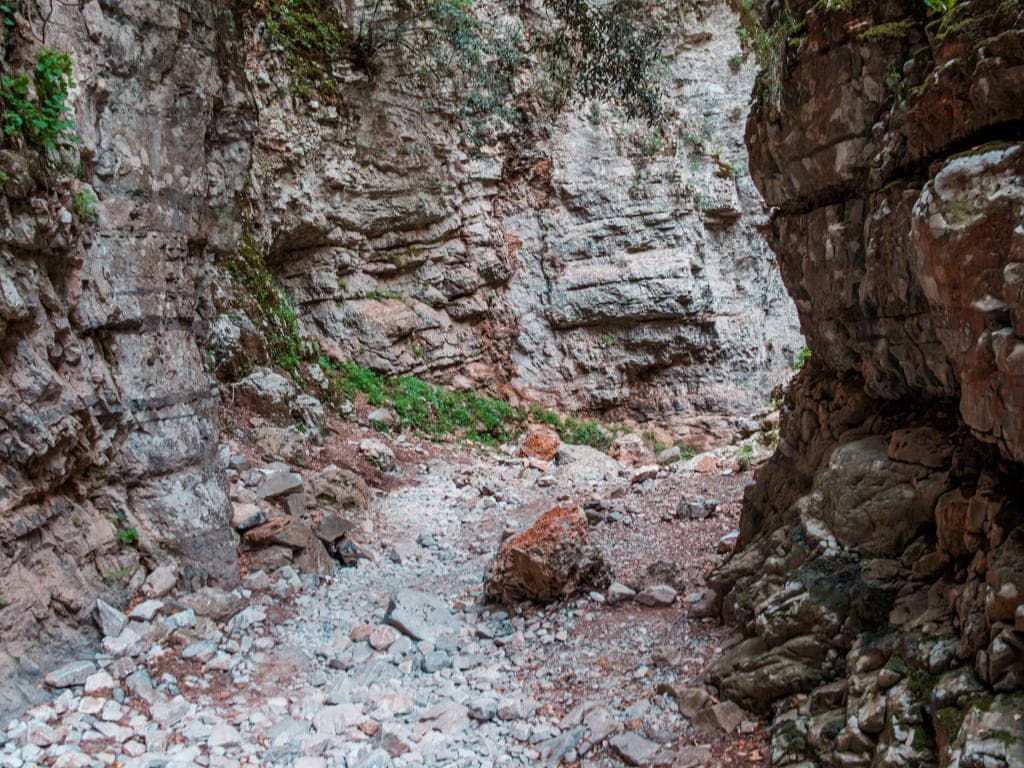
If you enter the gorge from the south (where the landscape is even more beautiful than in the north), be prepared for a steep climb. Good footwear is highly recommended in both directions, as there are occasional passages where you have to climb over rocks.
At the south exit, there is a tavern that also organises taxi rides back to the starting point. You wait until the car is full and pay five euros per passenger. You can either ride in the car or on the loading area. The journey takes a good 25 minutes.
Elafonissi – Crete’s dream beach
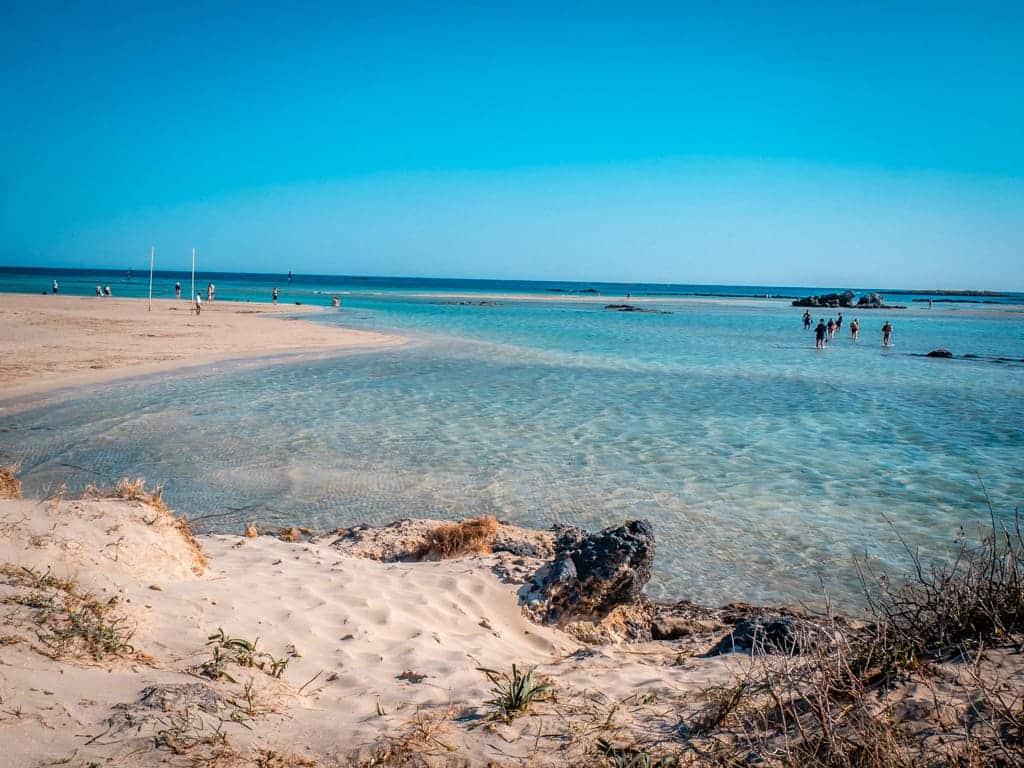
- Location: Elafonissi Beach
Elafonissi was the most beautiful sandy beach I saw in Crete: Elafonissi. It almost has a South Sea feel to it. The sand shimmers in pink shades, the sea is crystal clear and shimmers in all kinds of turquoise tones.
Elafonissi is probably the most visited beach in Crete. There are hundreds, if not thousands, of parking spaces, and even buses full of visitors stop here. The beach area is also very spacious – and if you go into the water and walk for a while (the water is extremely shallow, so you have to walk quite a distance before you can no longer stand), you can find some peace and quiet.
As there are also a few rocks sticking out of the sea, I went snorkelling here. I didn’t see that much, even at the rocks that are a little further out. However, the current became a little stronger, so I returned to shore after about an hour.
What you need to know when visiting Elafonissi Beach:
- If you come to Elafonissi, you should bring your own food, as the food on offer is neither particularly good nor cheap. The sun loungers were affordable at €10 for two loungers and a parasol.
- If you have a little time and are looking for some peace and quiet, you should head for the dunes. A small path leads through them and at the end there is another dream beach.
- I recommend arriving early to beat crowds and secure parking
- You should bring some cash for rentals/toilets & pack essentials (water, sunscreen, own umbrella/towels as shade is minimal).
- The beach offers shallow lagoon waters and an island to explore, but be mindful of the long walk from the car park and the protected flora/fauna.
Tip: If you’re coming from the north, there’s also a little highlight on the way: just past the village of Topolia and shortly before passing through the oldest tunnel in Crete, you should take a look at the Topolia Gorge. In front of the traffic lights, there is a small rest area with a kiosk and advertising for the panoramic view.
Palm forest at Preveli Beach in southern Crete
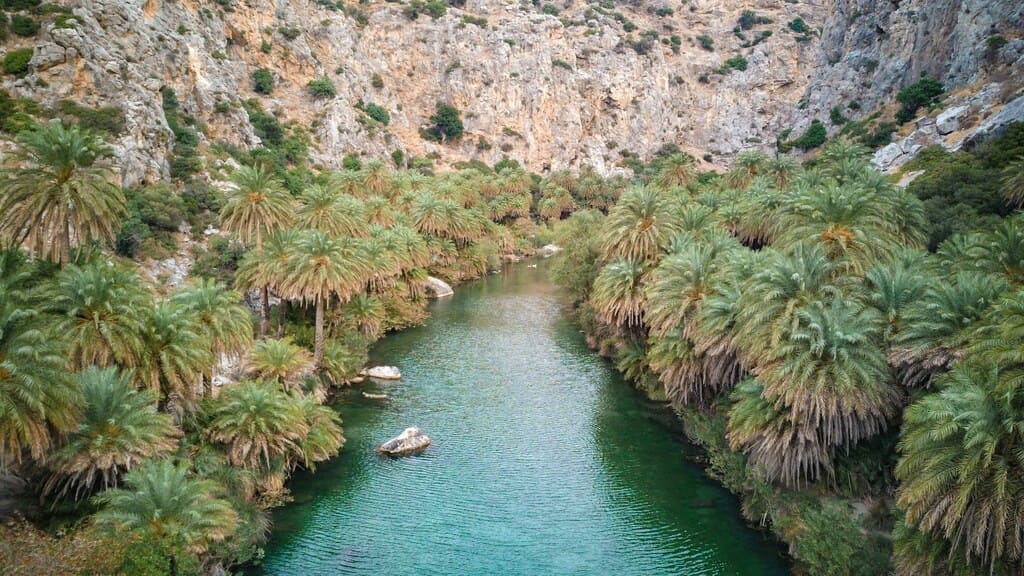
- Location: Preveli Beach
Preveli Beach is located on the south coast in the west of Crete and cannot be reached by car. From the car park, it is about a ten-minute walk down some steps until you finally reach the beach. If that’s too strenuous for you, there are also boats that depart from various locations, such as the nearby town of Plakias, reaching the beach after a short boat ride.
The exciting thing about Preveli is the incredible nature surrounding the beach. At Preveli Beach, the Megalopotamos River flows into the Libyan Sea, and the river has carved a gorge through the mountains. An impressive palm forest has grown up on the edge of the river.
You can hike through the palm forest from the beach, catching wonderful views of the river along the way – where, with a bit of luck, you may spot turtles.
Swimming with turtles in Lake Kournas
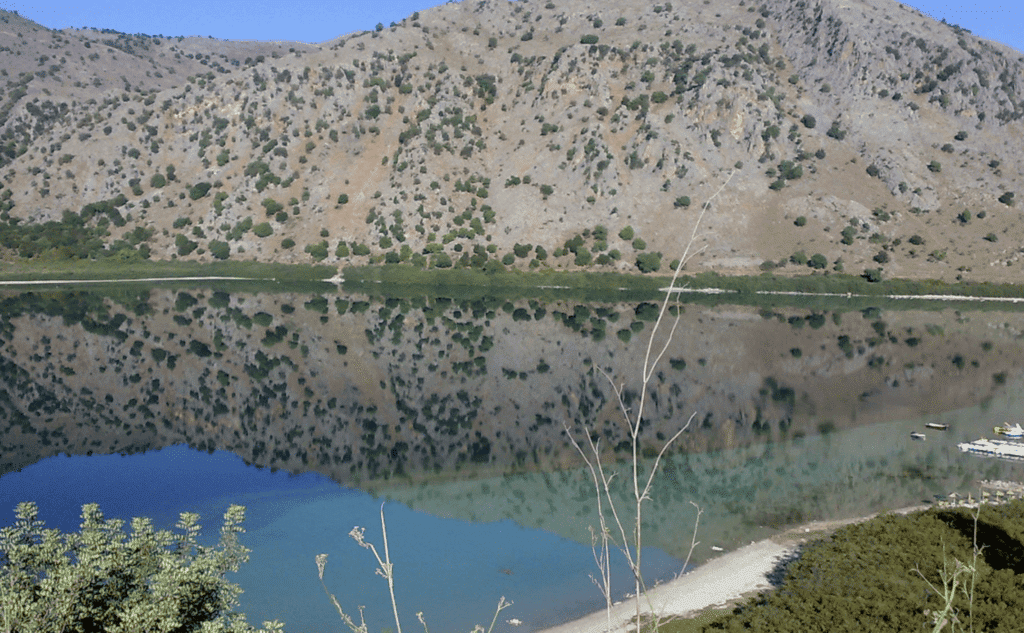
- Location: Lake Kournas
Lake Kournas was a place where I found the peace and quiet I was looking for on Crete. The island’s largest inland lake is very close to Georgioupoli, not far from Rethymnon, and is a real oasis.
You can find only a few tavernas here and there are pedal boats you can hire to take you out onto the lake. Swimming in the lake is generally allowed, but last winter washed away all the beaches and flooded the area, so in 2019 it was only possible to swim from a boat.
The water is home to numerous fish and turtles, which you are sure to see on the boat tour. Although they are quite shy, I saw some of them. Of course, there were other boats out and about, but it was easy to avoid each other. Unfortunately, I couldn’t swim because I was alone on the pedal boat and was afraid it would slip away, but for a little more money (I paid €5 for an hour), you could also hire pedal boats with slides.
I ate at Korissia Family Restaurant because I actually wanted to go to the beach – which was no longer there. The salad was very tasty, but the pedal boats were a little more expensive than at ‘Maria’s Boats’.
Best beaches in Western Crete
If you have booked your hotel in the city of Chania, the nearest beaches are: Nea Chora Beach Sandy beach 1.7 km west of the centre of Chania Koum Kapi Beach Sandy city beach 1 km east of the centre of Chania towards the Halepa district.
If you want to enjoy spectacular views of the picturesque landscapes of Crete, leave the crowded beaches and visit the small pebble bays such as Ravdoucha, Afrata, Menies (only by boat or jeep), Nopigia or Drapanias, Choni Beach, Skotini Beach.
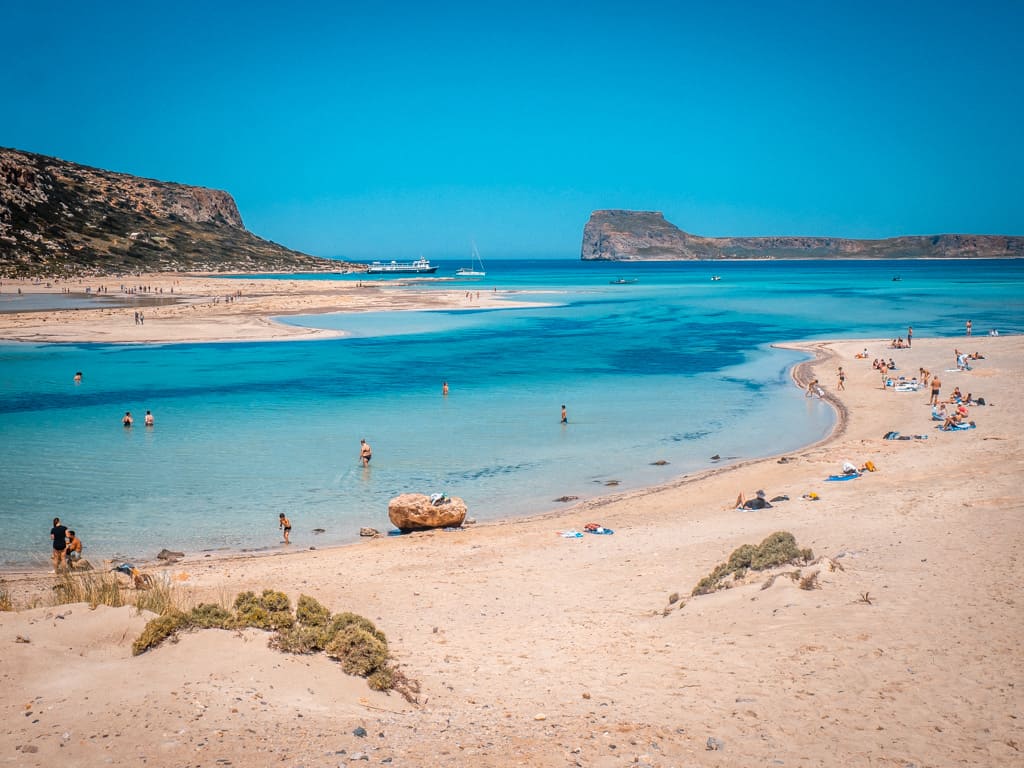
- The Balos lagoon: A nature reserve with dunes, at the western tip of the Gramvousa peninsula.
- Falassarna: A sandy beach and nature reserve, 17 km west of the coastal town of Kastelli-Kissamos, easily accessible by car.
- Golden Beach: Sandy beach 4 km west of Chania.
- Almirida: Sandy beach, small coastal village with taverns and cafés, 25 km west of Chania Town.
- Glaros Beach & Kato Daratso: Small bay with golden sandy beach 5 km west of Chania.
- Kalamaki Beach: Sandy beach with sports facilities, 6 km west of Chania Town.
- Marathi Beach: 2 great swimming bays near the airport with sandy beaches, azure blue water, sheltered from the wind, perfect place for children. The beach is well organised with taverns offering the best traditional Cretan food, parasols, sun loungers and showers. The beach has facilities for disabled people.
Continue Reading: How to visit the Balos Lagoon on Crete
Outdoor activities in Western Crete
Explore the traditional villages
Western Crete is dotted with small villages and towns that have retained their traditional charm. One of the most popular is Chania, a picturesque town with a Venetian harbour and a charming old town. Stroll through the narrow streets lined with traditional houses and stop at one of the many tavernas to enjoy authentic Greek cuisine.
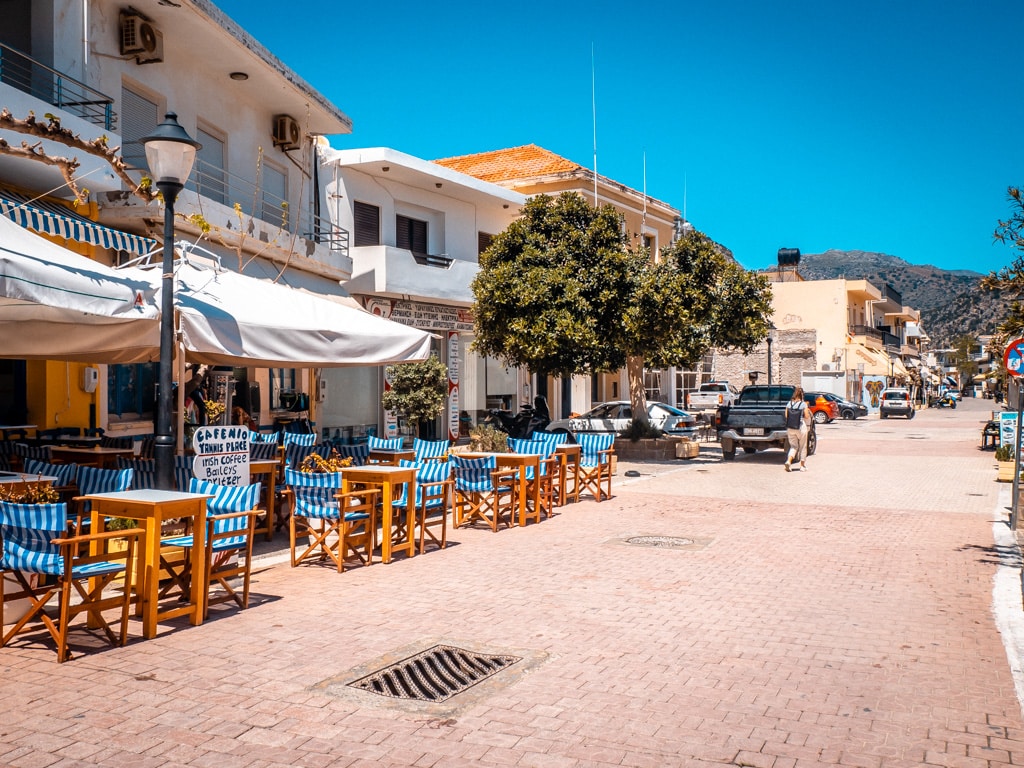
Another charming place worth visiting is Paleochora, known for its sandy beaches and lively atmosphere. The village of Paleochora is also a great place to go out, with many bars and clubs playing a variety of music.
Hike through the Samaria Gorge
The Samaria Gorge is one of Greece’s most famous hiking trails, and for good reason. The 16-kilometre hike takes you through a breathtaking gorge with towering cliffs, crystal-clear water and rich flora and fauna. The trail is challenging, but the views are well worth the effort. Be sure to bring plenty of water and wear sturdy shoes. Hiking through the Samaria Gorge is a must for any adventure seeker and is sure to be an unforgettable experience.
Further Activities in Western Crete:
- Horse riding in Crete – The riding centres are open all year round.
- Mountaineering in western Crete – The Crete Mountaineering Association was founded in 1930. Welcoming mountain huts in Chania, which can be found like birds’ nests on the mountain peaks, await all mountaineering enthusiasts.
- Cycling – Are you planning to cycle in western Crete? There is not much traffic on the paved country roads, but you need to be careful as some dirt roads unfortunately have deep potholes. Please watch out for wild animals and livestock! These roads through olive groves, vineyards and orange groves lead you to the heights of the rolling hills with spectacular views. Western Crete is a green, fertile landscape. Cycling through this landscape is an unforgettable experience.
- Sailing in Western Crete – Discover beautiful bays with crystal clear waters and enjoy an unforgettable sailing experience on a private boat trip with a skippered sailing yacht.
- Diving in Crete – Whether you are a beginner or an experienced diver seeking new places to explore, the unique underwater world of western Crete offers unforgettable diving experiences. Explore amazing wreck diving in crystal clear waters and the various dive sites in the numerous underwater caves.
Sights & Cultural highlights in Western Crete
Visit the Arkadi Monastery near Rethymnon
- Location: Arkadi Monastery (Ιερά Μονή Αρκαδίου)
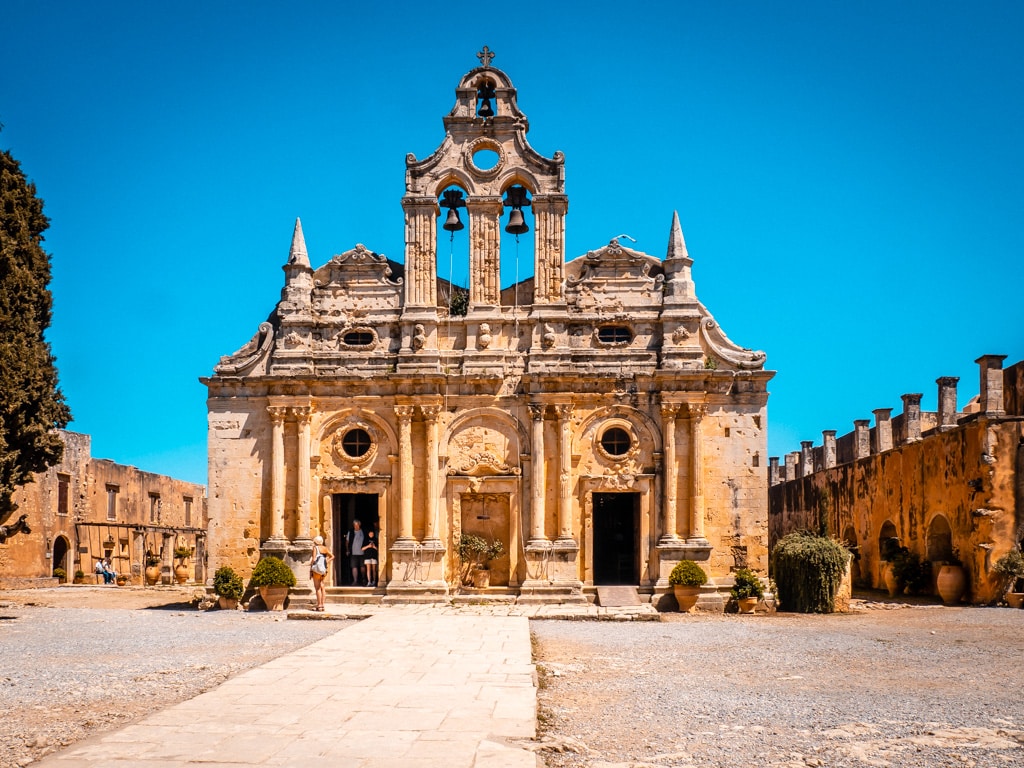
The Arkadi Monastery is the most famous monastery in Crete due to the Holocaust of 1866. The Arkadi Monastery has been designated a European monument of freedom by UNESCO because of its history.
Explore Agia Triada Monastery
The Agia Triada Monastery is located on the Akrotiri peninsula. The Agia Triada Monastery of the Holy Trinity is probably the most impressive monastery complex from the last period of Venetian rule in Crete due to its size and architectural form.
- Location: Holy Trinity Tzagarolon Monastery
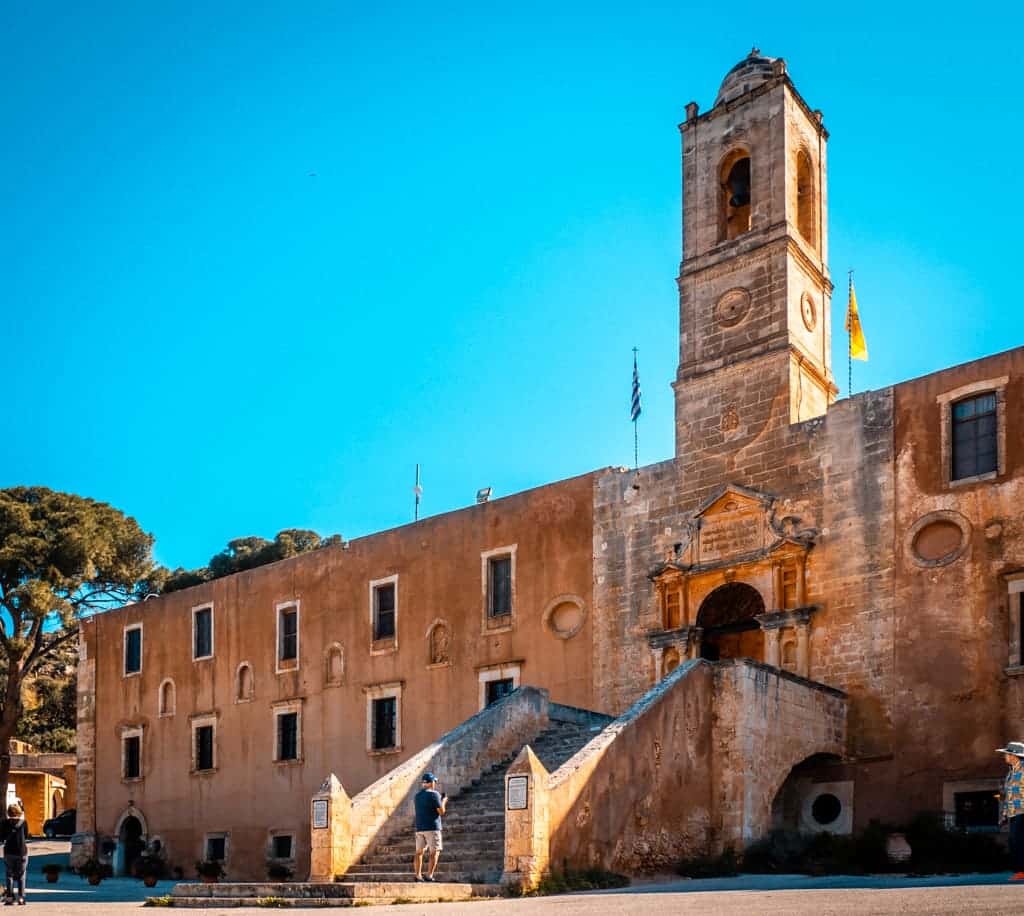
The small museum displays heirlooms that were saved from the historical events of the monastery, mainly icons and official documents. There is a small monastery shop where monks sell their organic olive oil and wine. The olive oil from the Holy Trinity Tzagarolon Monastery has won several awards.
Further Cultural Highlights in Western Crete:
- Moni Gonias Monastery in Kolimbari – The monastery was built in 1618, looks like a fortress and has a church with three apses and two chapels. In the monastery museum, you can admire the wealth of its icons and manuscripts.
- Ancient Aptera in Souda Bay – Aptera has been inhabited since the Minoan period in the 14th-13th centuries BC. Aptera became an important city around the 8th century BC. It was destroyed in a major earthquake in 365 AD, after which it was only sparsely inhabited. However, a monastery dedicated to St. John remained intact amid the ruins. Visitors can see Roman cisterns, ruins of Roman public baths and a newly excavated amphitheatre. Particularly impressive are the well-preserved cisterns from Roman times, which supplied the entire region with water.
- The Church of the Archangel Michael outside Kato Episkopi – This church is one of the most important and oldest monuments in Crete from the early Christian period. It is a pity that one of the oldest churches in Europe is so rarely visited. The wall paintings and mosaics have been well restored and are definitely worth seeing.
In western Crete, small, dreamlike, owner-run hotels are waiting to pamper you. In the hinterland, between olive groves and vineyards, you will find the most beautiful holiday homes and luxury villas with breathtaking views.
Recommended

Hi. I’m Dirk, adventure traveller, originally from Germany. In 2020, Island Hopper Crete, started as a Greece travel blog. In 2022, I founded a small travel agency in the Balkans to complement my recommendations with some of the best experiences that I found, organized by local partners and friends.
 English
  Français
  Nederlands
  Español
  Polski
  Svenska
  עִבְרִית